November marks the start of Phuket's tourist season, with clear skies, beautiful seas, and comfortable dry weather, making it popular among international patients who travel for surgery combined with a vacation. In the Thanksgiving Glow campaign, we want to invite everyone to see that "post-surgical recovery" is an important part of the results, because everything you eat, drink, and do each day after surgery directly affects your comfort, safety, and the appearance of your wounds.
This guide summarizes the ERAS (Enhanced Recovery After Surgery) approach in an easy-to-understand way, along with recommendations on Thai foods to choose and avoid, self-care in hot and humid weather, precautions for popular activities such as swimming, Thai massage, and island tours, as well as the type of care system you should look for during recovery in Phuket, so that your surgical trip is as relaxing and safe as possible.
ERAS principles: move quickly, eat well, and manage pain appropriately.
Enhanced Recovery After Surgery (ERAS) is a modern concept of surgical patient care that works together as a team, from plastic surgeons and anesthesiologists to nurses and coordinators, with the goal of reducing the body's stress from surgery. The key principles of ERAS include not fasting longer than necessary, adjusting fluids to be balanced, removing drains as quickly as possible, starting light walking (Early Ambulation), and starting to drink water or eat soft food from the first day after surgery when the body is ready.
Research in 2025 confirms that implementing the ERAS protocol in plastic surgery significantly reduces the length of hospital stay and helps reduce the use of opioid painkillers while maintaining a high level of patient satisfaction.
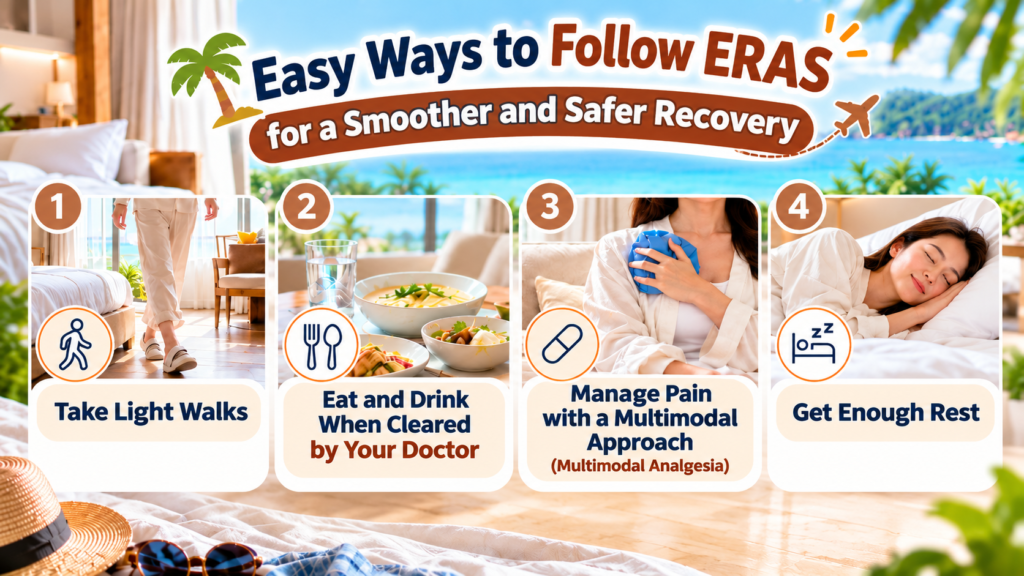
Things patients can easily do to follow ERAS principles
-Walk lightly, walking in the room or a short distance in the hotel corridor several times a day to stimulate blood circulation and reduce the risk of blood clots.
- Eat and drink when permitted, starting with plain water, clear beverages, and soft, easily digestible food.
- Manage pain through multiple methods together (Multimodal Analgesia), take medication as prescribed by the doctor, adjust posture for comfort, and apply cold compresses as instructed, without buying medications or herbs to take on your own.
- Get enough rest and sleep adequately, but do not lie still in bed all day.
Thai food to choose and avoid in hot and humid weather.
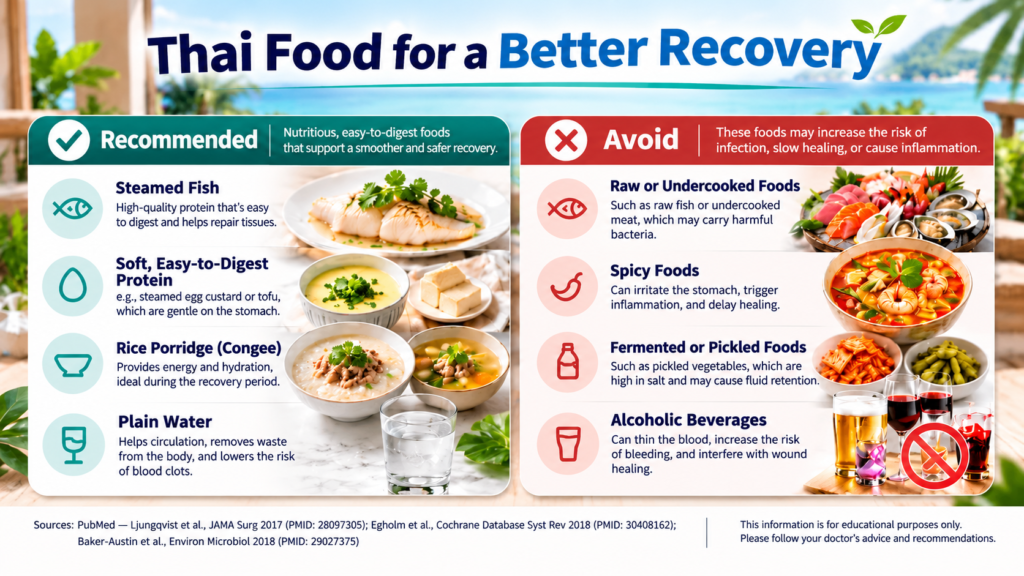
Thai food is diverse, but during recovery, the simple principle is to "choose cooked, clean, easily digestible food that is rich in protein."
Recommended menus
- Rice porridge, congee, clear soup with tofu and minced pork, steamed fish, steamed egg, and boiled chicken (easy to digest, high in protein for tissue repair).
- Boiled or stir-fried cooked vegetables and fruits that are cleanly peeled.
- Clean plain water, sipped regularly throughout the day.
Menus and drinks to avoid
- Alcohol. Drinking alcohol increases the risk of postoperative complications, including infection, cardiovascular and pulmonary complications, and abnormal bleeding. Avoiding alcohol therefore helps significantly reduce these risks.
- Raw or undercooked seafood, such as fresh oysters or shrimp in fish sauce, because there is a risk of contamination with Vibrio vulnificus, which grows well in warm water and can cause severe infection, especially in people with underlying diseases such as liver disease, diabetes, or immunodeficiency.
- Unheated fermented foods. If diarrhea or vomiting occurs, it will cause the body to lose water, interfere with medication absorption, and negatively affect recovery.
- Very spicy food. Although there is no evidence that it slows wound healing, spiciness may cause stomach discomfort in those who are not accustomed to it, so mild flavors should be eaten first in the early period.
Drinking water in hot and humid weather
Phuket has hot and humid weather, and the body can sweat easily even in an air-conditioned room. You should sip water regularly, observe that urine color is light yellow, and avoid alcohol because it makes dehydration difficult to assess.
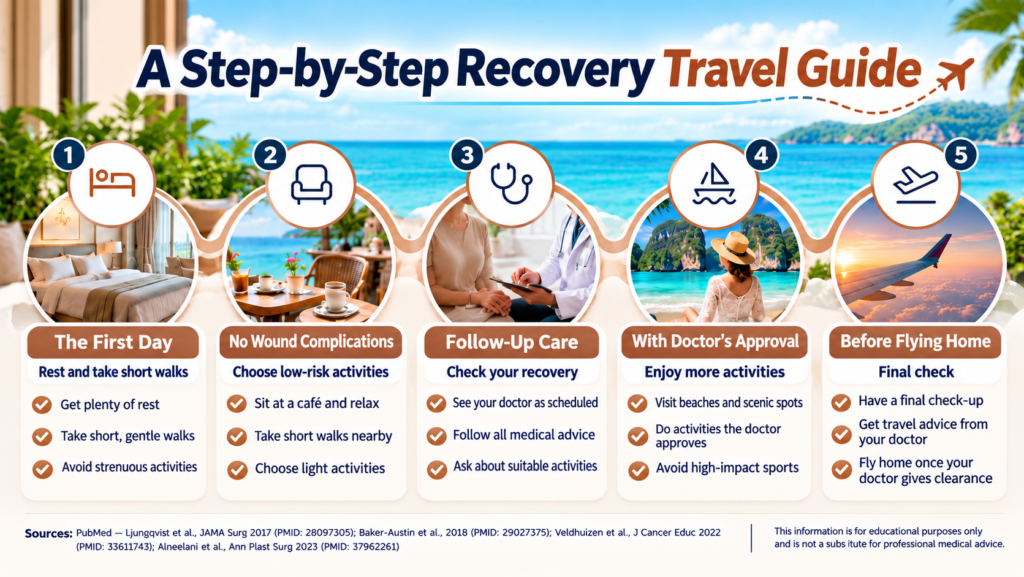
Activities you can do and should avoid, categorized by recovery stage.
Each patient's recovery and each procedure are different. You should always confirm with your surgeon before doing any activity.
1. Sunlight and scar protection
UV radiation from sunlight may slow the wound healing process and stimulate scars to become darker (Hyperpigmentation). You should wear covering clothing, use an umbrella and a hat, and avoid intense sunlight during the middle of the day. Once the wound is completely closed and the doctor permits, you can then start applying sunscreen to the scar area.
2. Swimming and playing in seawater
Soaking in swimming pools, jacuzzis, or seawater should wait until the wound is completely closed and the doctor permits only, because an open wound is a channel for pathogens to enter the body, especially Vibrio vulnificus in seawater and brackish water, which can cause severe wound infection. In the early period, it is recommended to take a walk along the beach in the shade in the morning or evening instead.
3. Thai massage and spa
Traditional Thai massage involves bending, pulling, and pressing hard, which is not suitable for a body that has just undergone surgery or still has swelling. Massage in the wound area and nearby areas should be avoided until the doctor permits.
4. Island tours and travel
Speedboat tours have impacts from waves and long sun exposure, so you should wait until the end of the trip or after the doctor has assessed that you are ready. Light activities such as sitting in cafes or briefly walking around Phuket Old Town can be done sooner.
Care system during recovery, follow-up appointments, nursing team, and accommodation.
Research on complications from traveling abroad for surgery found that infection is the most common complication, followed by wound dehiscence, blood/lymph fluid accumulation, and tissue necrosis. One important cause is the lack of continuous follow-up.
Safety therefore does not end when leaving the operating room. What patients should look for when staying for recovery includes
- A clear follow-up appointment schedule to check the wound, remove sutures, and assess symptoms before traveling back.
- A 24-hour contact channel with the nursing team for reporting abnormal symptoms such as fever, red swollen hot wounds, pus, or unusually severe pain.
- Accommodation conducive to recovery: clean, quiet, and convenient for traveling to the clinic.
- A sufficient recovery period, without rushing to travel back before the time recommended by the surgeon.
How does PPSI take care of you ?
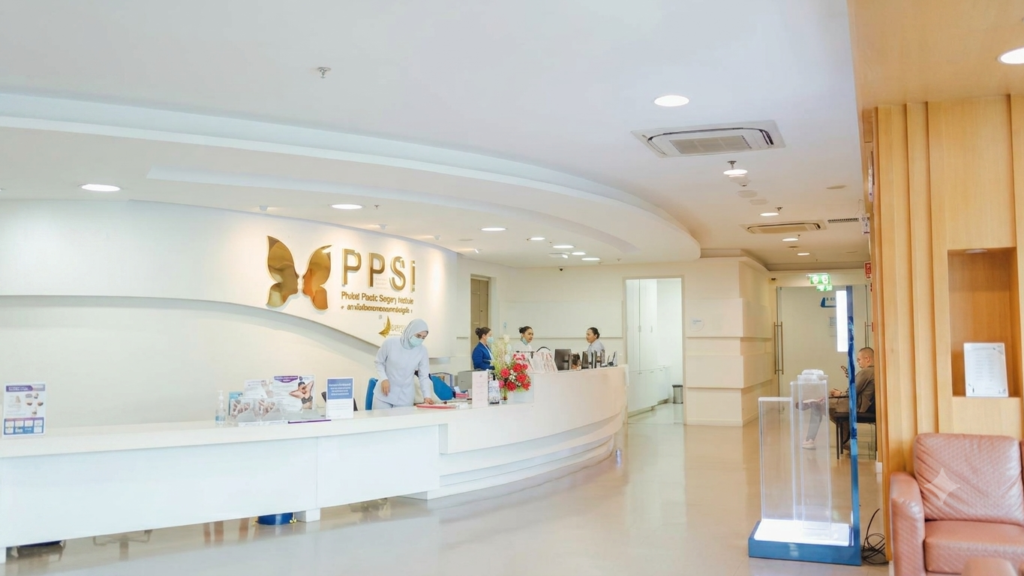
PPSI (Phuket Plastic Surgery Institute) designs continuous postoperative care from the first day until the day of return travel. The surgical team evaluates and plans personalized recovery. There are follow-up appointments according to each procedure, a nursing team contactable 24 hours a day, and hotel tie-in accommodation packages so that you can recover in a comfortable atmosphere, close to the care team, and receive advice on food and activities suitable for your stage of recovery.
Frequently Asked Questions (FAQ).
Q: During recovery in Phuket, what activities can I do ?
A: In the early period, you can do light activities such as short walks in the hotel, sitting in cafes, or walking along the beach in the morning and evening according to the ERAS principles. As for swimming, soaking in seawater, Thai massage, or speedboat tours, you should wait until the wound is completely closed and the surgeon permits, in order to prevent wound infection from water and reduce exposure to intense sunlight.
Q: After surgery, what types of food should be avoided ?
A: You should avoid raw seafood (such as fresh oysters or shrimp in fish sauce) to reduce the risk of Vibrio vulnificus. Avoid alcohol because it increases the risk of wound infection and bleeding, and be careful with unclean fermented foods and very spicy food that may cause diarrhea or stomach irritation.
Q: Why do I need to walk early after surgery even though the wound still hurts ?
A: Early mobilization is a key part of ERAS that helps reduce the body's stress, stimulate intestinal function and blood circulation, and reduce complications. It is not strenuous exercise, but light, short walks together with taking pain medication as prescribed by the doctor.
Q: How long should I stay recovering in Phuket before flying back ?
A: The duration depends on the type of procedure and the patient's physical condition. The surgeon will evaluate and set the date for the final wound check before permitting you to fly back, because research shows that appropriate follow-up greatly reduces complications.
Q: If I have a fever or abnormally red and swollen wound during recovery, what should I do ?
A: Contact the nursing team or surgeon immediately. Do not buy medication to take on your own, because infection is a common complication, and receiving treatment quickly will help prevent danger effectively.
References. (PubMed)
Ljungqvist O, Scott M, Fearon KC. Enhanced Recovery After Surgery: A Review. JAMA Surg. 2017;152(3):292-298. doi:10.1001/jamasurg.2016.4952. PMID: 28097305. https://pubmed.ncbi.nlm.nih.gov/28097305/
Foster L, Foppiani J, Patel A, et al. The use of enhanced recovery after surgery (ERAS) protocols in plastic surgery: A systematic review and meta-analysis of the literature. J Plast Reconstr Aesthet Surg. 2025;103:273-281. doi:10.1016/j.bjps.2025.01.072. PMID: 40037147. https://pubmed.ncbi.nlm.nih.gov/40037147/
Egholm JW, Pedersen B, Møller AM, et al. Perioperative alcohol cessation intervention for postoperative complications. Cochrane Database Syst Rev. 2018;11(11):CD008343. doi:10.1002/14651858.CD008343.pub3. PMID: 30408162. https://pubmed.ncbi.nlm.nih.gov/30408162/
Baker-Austin C, Oliver JD. Vibrio vulnificus: new insights into a deadly opportunistic pathogen. Environ Microbiol. 2018;20(2):423-430. doi:10.1111/1462-2920.13955. PMID: 29027375. https://pubmed.ncbi.nlm.nih.gov/29027375/
Veldhuizen IJ, Schroen E, Lee EH, et al. Sun Protection Behavior Following Skin Cancer Resection and Reconstruction. J Cancer Educ. 2022;37(5):1401-1406. doi:10.1007/s13187-021-01971-x. PMID: 33611743. https://pubmed.ncbi.nlm.nih.gov/33611743/
Alkaelani MT, Koussayer B, Blount T, et al. Complications of Medical Tourism in Aesthetic Surgery: A Systematic Review. Ann Plast Surg. 2023;91(6):668-673. doi:10.1097/SAP.0000000000003683. PMID: 37962261. https://pubmed.ncbi.nlm.nih.gov/37962261/
McCrossan S, Martin S, Hill C. Medical Tourism in Aesthetic Breast Surgery: A Systematic Review. Aesthetic Plast Surg. 2021;45(4):1895-1909. doi:10.1007/s00266-021-02251-1. PMID: 33876284. https://pubmed.ncbi.nlm.nih.gov/33876284/