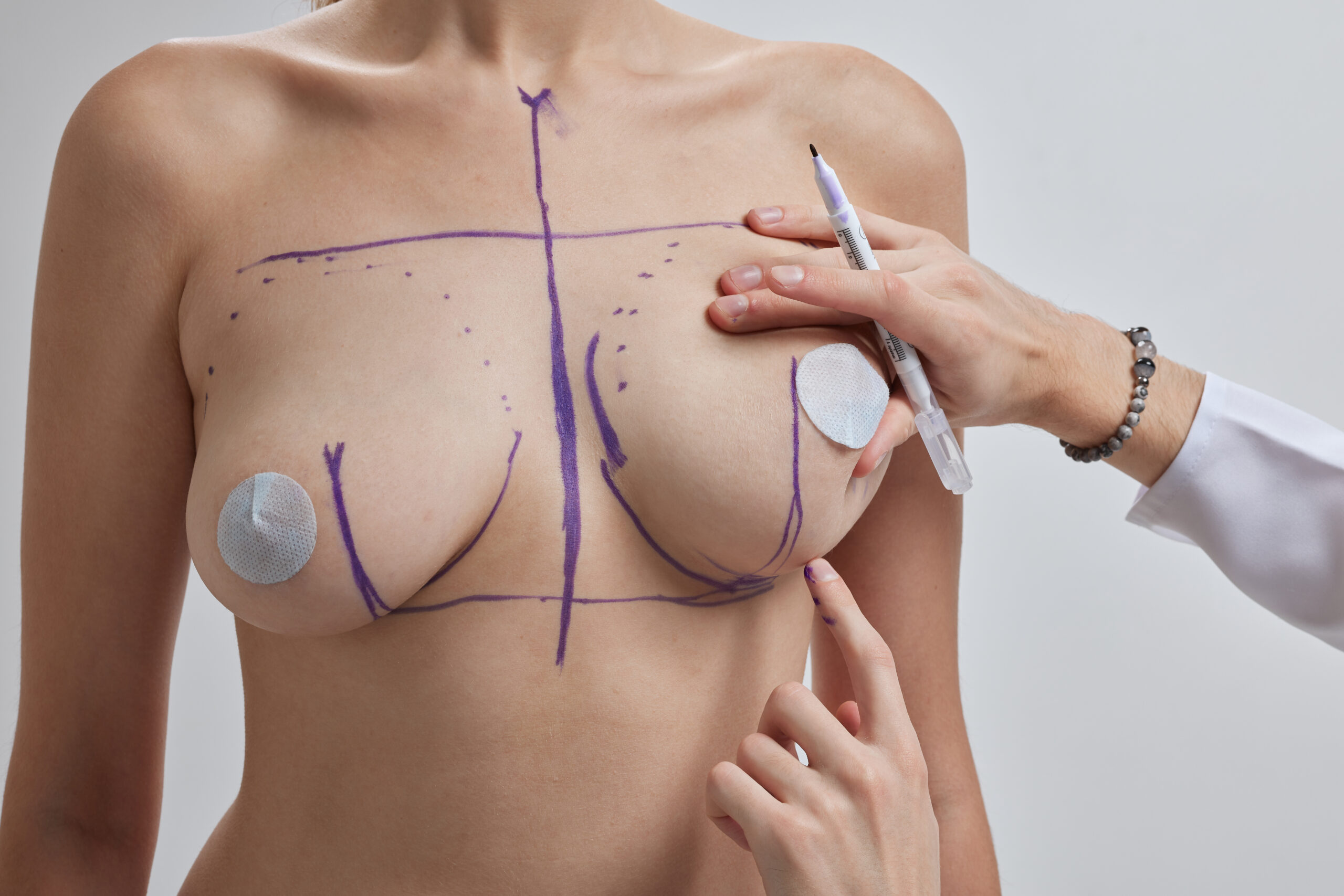
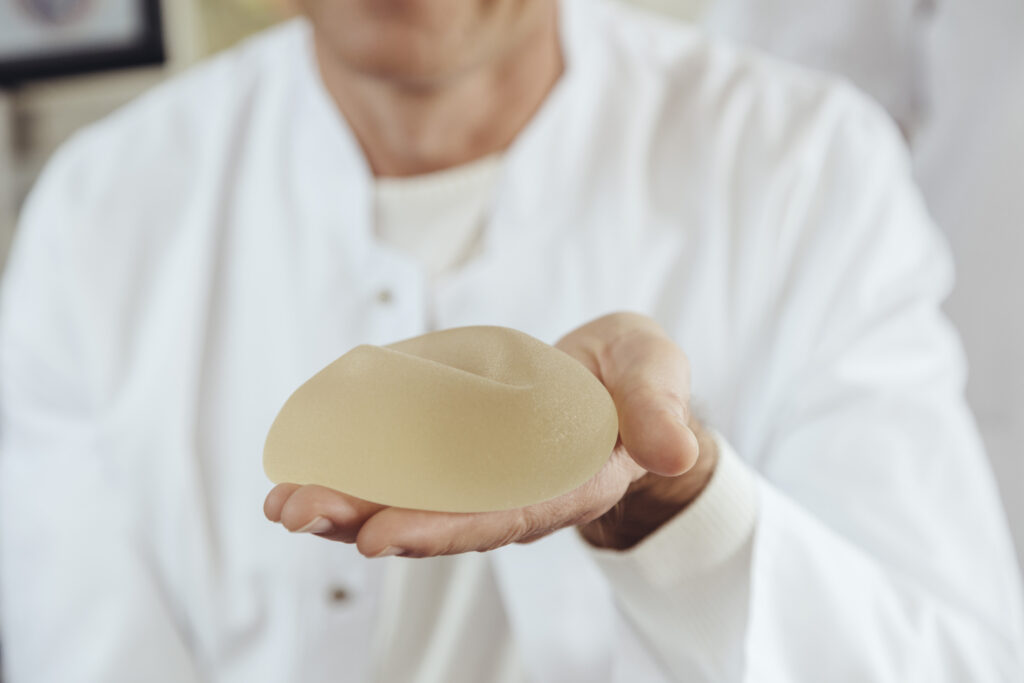
From the perspective of plastic surgery, a proportionate breast contour that suits the body shape not only enhances personality and confidence but is also part of overall health and quality of life. However, breast augmentation with implants does not mean that no changes will occur later, because over time, both the breast implants and surrounding tissues may change with age, pregnancy, body weight, or other factors, and complications requiring correction may also arise.
Breast Revision Surgery, or Breast Correction, is a surgical procedure to improve or correct problems that occur after previous breast augmentation, such as changes in shape, breast asymmetry, implant displacement, or capsular contracture. It differs from Breast Reconstruction, which is the creation or restoration of a breast after loss of breast tissue, such as following breast cancer treatment.
In the view of plastic surgeons, breast revision surgery is significantly more complex and challenging than initial augmentation surgery, because the surgeon is not working with intact natural tissue (Virgin Tissue) but must deal with accumulated scar tissue, previous scars, a deformed pocket within the breast cavity, and reduced tissue elasticity. Awareness of medical "warning signs" is therefore important in helping patients receive timely treatment before problems progress and cause long-term health consequences.
1. An in-depth look at 5 medical warning signs that indicate the need to consider breast revision surgery.
Our bodies are constantly changing. It is therefore not unusual for the breasts to change shape or develop abnormalities after several years following augmentation, and it does not always mean that the initial surgery was unsuccessful. Patients should monitor for and observe five important warning signs as follows:
1.1 Capsular Contracture
When breast implants are placed, the body forms a thin layer of scar tissue around the implant as part of the normal wound-healing process. However, in some individuals, this scar tissue may thicken and contract further, causing the breast to become hard, tight, misshapen, or painful.
The severity is typically assessed using the Baker Classification, which is divided into 4 grades:
Grade I: The breast is soft and natural; no capsule can be felt.
Grade II: The breast begins to feel slightly firmer; the capsule can be somewhat felt, but the external appearance still looks normal.
Grade III: The breast is clearly firm; the edge of the silicone implant can be felt, or distortion begins to become visible externally. This is considered an indication for revision surgery.
Grade IV: The breast is firm, clearly deformed, and accompanied by pain, tenderness, or deep aching. This is a significant indication requiring immediate surgical removal of the capsule.
Triggering factors for capsular contracture: It can result from acute inflammation, infection with mild bacteria such as Staphylococcus epidermidis that forms a biofilm on the silicone surface, post-operative hematoma, as well as smoking behavior. Treatment approach: If the contracture is at a severe grade (Grade III–IV), it must be treated with complete surgical removal of the capsule (Capsulectomy) and replacement with a new breast implant. This requires a highly experienced surgeon to prevent residual capsule tissue, which could cause the breast to become firm again.
Over time, breast implants may shift from their original position due to various factors, such as changes in tissue, capsular contracture, or changes in the pocket where the implant is placed. Conditions that can occur include:
Bottoming Out: The breast implant shifts lower than the optimal position, causing the lower part of the breast to appear elongated or sagging, and the nipple may appear higher than normal. Correction may be achieved by adjusting or repairing the breast pocket and reinforcing tissue strength, such as with the Internal Bra technique, as appropriate.
Symmastia: Both breast implants shift too far toward each other, causing the cleavage to become narrow or disappear. This may be related to the creation of a pocket in the central chest area that is too wide, or an inappropriate implant size. Treatment depends on the cause and may involve repairing the pocket along with adjusting the size or replacing the implant.
Upward Displacement: The breast implant sits higher than the desired position, causing the upper part of the breast to appear overly prominent while the lower part may appear less full than normal.
1.2 Implant Rupture or Leakage
Breast implants can rupture or leak due to material degradation, injury, or other factors, with symptoms depending on the type of implant.
Silicone Gel Implant: Rupture may be a Silent Rupture, which has no obvious symptoms because the gel retains its shape and may remain within the capsule surrounding the breast. Ultrasound or MRI can help assess implant rupture.
Saline Implant: When a leak occurs, the saline solution is absorbed into the body, causing that breast to gradually and noticeably deflate.
Important: Having breast implants does not mean they must be replaced once 10 years have passed, but the risk of rupture increases with the length of time they are in place. Therefore, follow-up and evaluation should be conducted according to the doctor's recommendations.
Note: Breast Implant Illness (BII) is a group of symptoms reported by some individuals with breast implants, such as fatigue, muscle aches, or other systemic symptoms. However, at present it cannot be clearly concluded that it is caused directly by breast implants. Therefore, it should not be stated as fact that "gel leakage causes BII."
Checklist of suspicious symptoms that implants may have ruptured or leaked: Persistent firmness or tightness of the breast lasting more than 1 year; the breast suddenly becomes softer or changes shape after pressure or impact; deep aching pain; findings from annual ultrasound or mammogram; having had breast augmentation for more than 10 years; and using implants of unknown brand or model.
1.3 Rippling of the Breast Skin
This is a condition in which patients can feel wrinkles or see the breast skin form wave-like ridges, similar to water ripples, along the side edges or the breast mound when bending forward. It is commonly found in individuals with little original breast tissue, who are very thin, or it may result from augmentation in the subglandular plane (Subglandular), as well as the use of implants with incompletely filled gel that wrinkles easily. It can be corrected by changing the implant plane to lie beneath the muscle or the muscle fascia, or by performing fat grafting using the patient's own fat to increase the thickness of the skin layer around the implant.
1.4 Chronic Pain, Seroma, or Acute Infection
Infection: If there is swelling, redness, heat, pus, or fever, especially in the period after surgery, you should see a doctor promptly. Treatment depends on the severity, and in some cases, temporary removal of the breast implant may be necessary.
Delayed Seroma: If one breast abnormally swells and enlarges, especially when it occurs many years after implant placement, further evaluation should be sought. The doctor may consider ultrasound and fluid aspiration to determine the cause, as well as screening for BIA-ALCL (Breast Implant-Associated Anaplastic Large Cell Lymphoma), a rare type of lymphoma associated with certain types of breast implants.
2. Aesthetic Breast Revision Surgery Based on Changing Preferences and Body Physique
In addition to pathological factors and health problems, the desire to adjust one's personal appearance is also a common indication for breast revision surgery:
Upsizing: For those who wish to go up a size, this can be done safely if the original breast tissue has sufficient elasticity (usually assessed at least 6 months or more after the initial augmentation).
Downsizing: This is a modern beauty trend that emphasizes a natural, proportionate shape. However, when downsizing breast implants, the surgeon must have expertise in managing the old pocket space, which is larger than the new silicone implant. Otherwise, the new implant may shift, rotate, or tilt out to the side.
Breast Ptosis: Natural aging, rapid weight loss, or pregnancy and breastfeeding cause the skin to lose elasticity, resulting in sagging that falls over the implant. In this case, the surgeon must perform a breast lift (Mastopexy) together with implant revision to restore a perky, youthful shape.
Breast Revision Surgery is an advanced plastic surgery procedure that requires both the science of assessing distorted anatomical structures and the art of reshaping them to be smooth, beautiful, and safely natural. If you begin to notice even one of the warning signs, you should not leave it untreated, because internal structural problems such as capsular contracture tend to become progressively more severe over time.
The most important first step is to prepare documents or information about your original breast implants (brand, size, model) and consult with a highly skilled, specialized plastic surgeon at a medical facility that meets international safety and sterilization standards, such as JCI accreditation, to ensure a flawless treatment outcome and confident, long-term resolution of the problem.
Q&A
Q1: When should you consider breast revision surgery (Breast Revision) ?
A: When problems are found, such as capsular contracture, implant displacement, rupture or leakage, breast skin rippling, or chronic pain, as well as when you want to adjust the size or correct sagging breasts.
Q2: What are the symptoms of capsular contracture around breast implants ?
A: The breast may feel firm, tight, distorted, or painful. Grade III–IV is considered the level that the article identifies as an indication for revision surgery.
Q3: If you want to change your breast size, can you undergo Breast Revision ?
A: It can be done for both upsizing and downsizing. The doctor will assess tissue elasticity and the condition of the original breast pocket before planning the surgery.