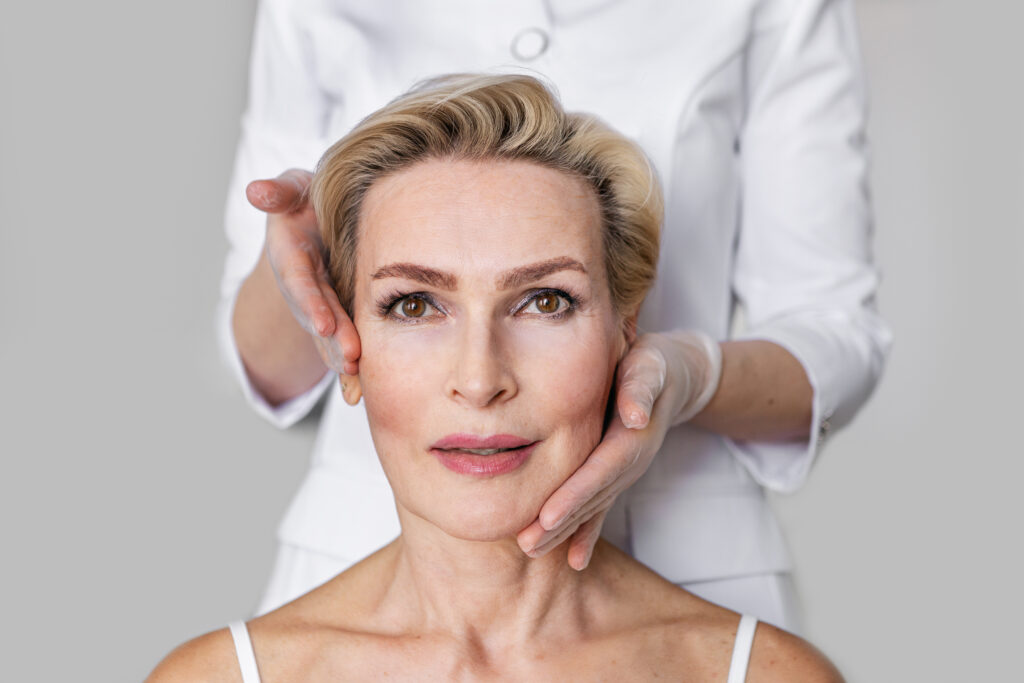
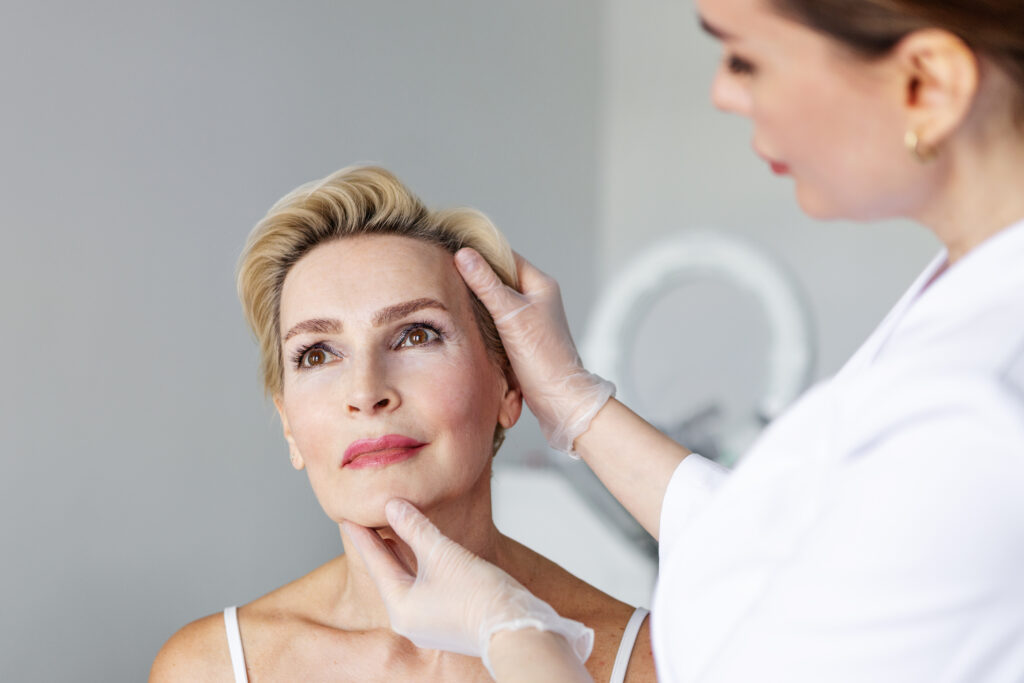
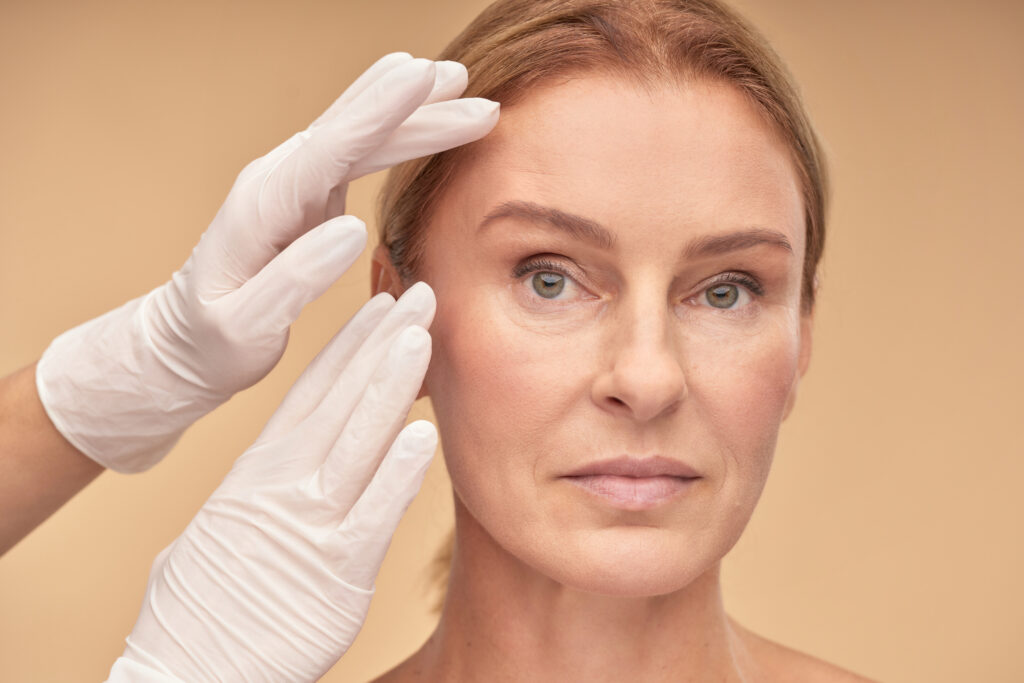
Upon reaching the age of 40 and beyond, issues such as skin laxity, deep nasolabial folds, and a loss of defined facial contours often become increasingly prominent. In many cases, non-surgical lifting innovations may not deliver fully satisfactory results. As a result, "facelift surgery" has become one of the most popular aesthetic procedures, with a continuously growing number of individuals seeking information and undergoing treatment to visibly rejuvenate their facial appearance and achieve long-lasting results.
1. How Much Can a Facelift Lift and Tighten ?
A facelift in the modern era is no longer merely a matter of "pulling the skin tight" as in the past, but rather a comprehensive restructuring of facial aesthetics. This procedure addresses the primary underlying issues as follows:
Deep structural lifting: The surgeon lifts and repositions the subdermal tissues and relocates the fat pads that provide facial contour back to a higher, more appropriate position.
Removal of excess skin and fat: Excess skin and muscle are meticulously excised, and liposuction of excess fat in the neck and submental region may also be performed to refine the jawline for a sharper definition.
Facial volume restoration: In many cases, surgeons recommend combining a facelift with fat grafting to restore volume in hollow areas such as the cheeks or temples, helping the face regain a fuller, softer, and more natural appearance.
2. An In-Depth Look at Current Facelift Techniques
Natural-looking, non-stiff, and long-lasting facelift results depend on the selection of a surgical technique tailored to each patient's anatomy and degree of laxity. Examples of widely popular deep-plane lifting techniques include:
SMAS Facelift: The surgeon dissects the skin layer to access, suture, and suspend the superficial musculoaponeurotic system (SMAS) that supports the face, restoring a smooth, lifted appearance.
- Advantages: Reduces tension on external skin sutures, resulting in smoother scars and a lower risk of scar widening or dropping.
- Suitable for: Individuals with moderate laxity who desire well-balanced lifting of the facial contour and cheeks.
Deep Plane Facelift: An advanced technique in which the surgeon dissects deeper beneath the SMAS layer to release the natural retaining ligaments and lift the skin, fat, and muscle as a single composite unit (composite elevation).
- Advantages: Precisely corrects deep nasolabial folds and marionette lines, delivering soft, natural-looking results without a tight or pulled sensation, with results lasting 10–15 years.
- Suitable for: Individuals with more significant laxity or those seeking advanced structural facial rejuvenation.
(Additionally, surgeons may consider other techniques such as the Mini Facelift or endoscopic-assisted surgery, depending on the suitability of each patient's facial structure.)
Where Are the Surgical Incisions Located ?
To ensure worry-free aesthetic results, the surgeon makes incisions above the hairline, extending along the natural curve of the hairline, through the crease in front of the ear, around behind the ear, and ending at the lower scalp. This approach conceals scars in the least visible locations, with wounds meticulously closed using fine sutures.
3. Facelift Pricing
Facelift pricing varies according to the degree of laxity, the selected surgical technique, and the extent of the areas requiring correction on an individual basis:
Starting price at Phuket Plastic Surgery Institute (PPSI): Starting from 170,000 THB.
Value and international standards: This is a comprehensive treatment package that includes close monitoring under JCI international safety standards, performed by a team of board-certified plastic surgeons with instructor-level expertise, along with premium recovery care.
4. Preoperative Preparation
To ensure a smooth procedure and minimize postoperative risks, patients should strictly follow these recommendations:
1. Discontinue blood-thinning medications: Avoid aspirin, aspirin-containing medications, and ibuprofen for at least 2 weeks before surgery to reduce the risk of abnormal bleeding.
2. Stop smoking: For at least 2 weeks before surgery, as smoking affects the response to anesthesia and slows the wound healing process.
3. Provide a detailed health history: This includes underlying medical conditions, drug allergies, current medications, and hypertension, which must be reported to the surgeon in advance in all cases.
5. Recovery and Postoperative Care
Postoperative self-care is essential to help the face settle more quickly and prevent wound dehiscence. At PPSI, there is a systematic timeline and set of protocols as follows:
Immediate Postoperative Period (During Hospital Stay)
- Initial recovery: Following surgery, which takes approximately 6 hours under general anesthesia, patients will be admitted for observation at the hospital for 2 nights.
- Fluid drainage: The surgeon may temporarily place a small drain beneath the skin behind the ear to help drain excess blood or fluid. Typically, the drain is removed the following day (1 day after surgery).
- Initial swelling reduction: The surgeon will wrap the head with bandages to help reduce swelling and bruising. These bandages are removed within a few days after surgery.
Self-Care and Daily Living After Returning Home
- Wearing a facial compression garment: After the head bandages are removed, patients must continue wearing a special facial compression garment for 2–3 weeks to help support the facial contour and reduce swelling.
- Personal hygiene: Patients may shower and wash their hair 2 days after surgery.
- Returning to work and driving: A 1-week rest from work is recommended. After the first week, patients may gradually resume driving as normal.
Important Restrictions During Recovery
- Avoid strenuous activities to prevent wound tension, which may cause the surgical wound to widen and result in more prominent scarring.
- Avoid dental treatment in the initial postoperative period to prevent opening the mouth too widely, which could affect the surgical wound around the ear.
6. Potential Risks and Complications
Although current technology is highly safe, facelift surgery still carries certain risks that patients should be aware of:
Hematoma: A rare but noteworthy condition.
Temporary numbness: Nerves near the ear may be affected by surgery, resulting in temporary numbness, which typically gradually recovers, with full sensation returning within a maximum of 12 months.
General risks: Such as postoperative infection or reactions to general anesthesia. Antibiotics are prescribed prophylactically. The key to safe aesthetic outcomes: The success of a facelift depends not only on the technique but also on the expertise of the specialist surgeon and the safety of the medical facility. Phuket Plastic Surgery Institute (PPSI), located within Bangkok Hospital Siriroj, is accredited under JCI international standards, with a team of anesthesiologists and nurses providing 24-hour care to deliver beautiful and safe results at an international level.
The Key to Safe Aesthetic Outcomes
The success of a facelift depends not only on the surgical technique, but also on the expertise of the specialist surgeon and the safety standards of the medical facility. Phuket Plastic Surgery Institute (PPSI), located within Bangkok Hospital Siriroj, is accredited under JCI international standards, with a team of anesthesiologists and nurses providing 24-hour care, in order to deliver beautiful and safe results at an international level.
Q&A
Q1: What issues can a facelift address ?
A: It helps lift deep structural layers, removes excess skin and fat, and can refine the jawline, neck, and submental areas.
Q2: What is the starting price for a facelift at PPSI ?
A: The standard package starts at 159,000 THB.
Q3: How long is the recovery period after a facelift ?
A: Patients require a 2-night hospital stay, approximately 1 week off from work, and full recovery takes approximately 4 weeks.