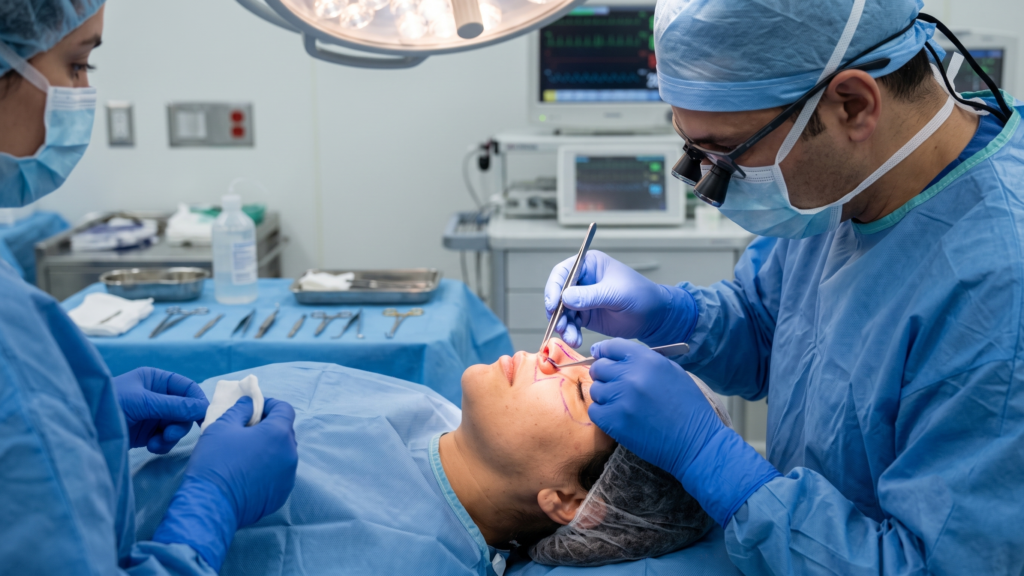
Phuket Plastic Surgery Institute (PPSI) is a premier, internationally accredited aesthetic and plastic surgery center. Bringing together an innovative team of highly experienced, board-certified plastic surgeons, we are dedicated to delivering the safest and highest quality surgical care. Equipped with state-of-the-art medical technology, PPSI provides attentive, compassionate care at every step of your journey from the initial consultation to complete post-operative recovery. This unwavering commitment is why we have earned the long-standing trust of both local and international patients.
When it comes to rhinoplasty, achieving a natural shape that harmonizes beautifully with your face involves more than just selecting the right style or materials. The 'surgical technique' itself is the cornerstone of the procedure, requiring a specialist plastic surgeon to carefully evaluate and tailor the approach to each patient's unique anatomical structure. To guide your decision, we have compiled the key differences between the three main rhinoplasty techniques below :
Closed Rhinoplasty
Closed rhinoplasty is a surgical approach where all incisions are meticulously hidden inside the nostrils, allowing the surgeon to reshape the nasal structure through these internal access points. The primary benefit of this technique is the absence of any visible external scarring, combined with a shorter operative duration, faster recovery, and minimal post-operative swelling and bruising. However, a key limitation is the surgeon’s restricted visibility of the internal anatomy. Consequently, this technique is ideal for patients with a solid existing nasal foundation who seek mild-to-moderate enhancement without any underlying structural deformities.
Semi-Open Rhinoplasty
Semi-open rhinoplasty involves incisions inside both nostrils, creating a slightly wider opening than the closed technique. This grants the surgeon a clearer view of the nasal tip cartilage. The key advantage remains the absence of any external scarring, while allowing more precise cartilage suturing or tip grafting with autologous tissues compared to the closed method. However, because visualization is still relatively restricted, this technique is not suitable for correcting highly complex structural deformities or severe deviations.
Open Rhinoplasty
Open rhinoplasty involves a small incision across the columella (the narrow strip of tissue separating the nostrils), allowing the surgeon to fully elevate the nasal skin envelope. The primary benefit is that it provides 100% direct visualization of the internal anatomical structure, enabling the surgeon to precisely and safely correct complex issues from every dimension. This approach is ideal for addressing a crooked nose, a wide nasal base, or complex revision cases that require a complete aesthetic transformation. The limitations include a small, temporary scar at the base of the nose (which gradually fades over time), along with more pronounced swelling and a longer recovery period compared to other techniques.
Selecting the most suitable rhinoplasty technique depends entirely on your unique nasal structure and personal goals, rather than preference alone. We invite you to undergo a comprehensive structural evaluation with PPSI’s specialist plastic surgeons to co-create a safe, Personalized Treatment Plan designed to deliver the most beautiful, natural-looking results.