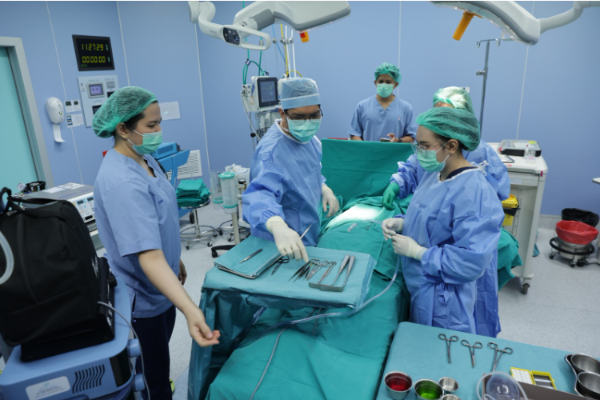
Within The Patient Safety Diamond framework, the procedure—or "The Procedure"—represents one of the four fundamental pillars that determine the safety and success of aesthetic surgical operations. This dimension extends beyond merely the technical surgical expertise of the surgeon but encompasses "operative methodology" ranging from pre-operative planning, measures within the operating room, to international standard-validated technical innovations.
This analysis delves into the selection of appropriate surgical procedures and safety standards within the operating room, referencing standards from Joint Commission International (JCI) and international aesthetic surgical practice guidelines.
1. Selection of the Appropriate Procedure: "The Right Disease and the Right Patient" (The Right Suitability)
The foundation of safety in this dimension lies in analyzing whether the selected procedure constitutes an appropriate intervention aligned with the patient's actual anatomical condition and underlying concerns.
• Assessment Based on True Anatomy: For example, a patient presenting with breast ptosis (sagging) who desires only silicone augmentation (Breast Augmentation) requires the surgeon to provide evidence-based education that this procedure alone may not adequately address the problem and that concurrent breast lifting (Breast Lift) is necessary to achieve both safe and aesthetically pleasing outcomes.
• Comprehensive Integrated Preparation: For patients presenting with particular challenges, such as elevated Body Mass Index or prior weight reduction surgery, the procedure must be planned collaboratively with a multidisciplinary team including nutritionists and internists to prepare the patient's physiological state adequately for major surgical intervention.
2. Employing Technology to Enhance Precision: Technology-Assisted Planning (Precision Planning)
Safe procedures must minimize opportunities for trial-and-error approaches through digital technology.
• 3D Simulation: Utilizing artificial intelligence systems and three-dimensional imaging simulation (such as Crisalix) enables patients to visualize surgical outcomes in advance, reducing the expectation gap (Expectation Gap) and assisting surgeons in precisely planning the placement of supplementary materials.
• Site Marking Protocol: To prevent critical-level errors, the surgeon must personally mark the specific surgical site on the patient's body using clear, unambiguous symbols. Following JCI standards, this marking serves to confirm that the surgical location corresponds exactly with the treatment plan at 100% accuracy.
3. Final Safeguard in the Operating Room: Surgical Safety Checklist
Operative procedures must be controlled through a systematic double-check verification system as rigorous as aviation safety standards.
• Time-Out Protocol: Before initiating the procedure, the surgeon, anesthesiologist, and nursing staff must pause all activities to collectively verify three critical elements: correct patient identification, correct anatomical location, and correct surgical procedure.
• Verification of Implanted Materials (Implants): For breast augmentation procedures, verification of implant pouch dimensions and model specifications occurs through multiple checkpoints, from pre-anesthesia assessment through the immediate moment before insertion into the patient's body. This ensures confirmation that the device matches the agreed-upon specifications.
4. Innovation Subjected to Validation and Ethical Surgical Practice (Innovation & Ethics)
Techniques employed must be internationally recognized methodologies with continuous development to minimize operative complications.
• Specialized Innovations: Such as the GRS Phuket Technique (utilizing small bowel segments to create vaginal canal), which represents innovation published in peer-reviewed international journals, designed to address depth-related complications and minimize infection risks, or breast lifting procedures utilizing autologous tissue to avoid long-term foreign material-related complications.
• Systematic Knowledge Sharing (Share Knowledge): Medical teams must maintain systematic monthly case review conferences to exchange technical insights and prevent recurrent adverse events.
• Ethical Authority to Decline: The most complete dimension of procedural excellence encompasses the ethical authority to decline surgical intervention—if assessment reveals that technical risk or the patient's physiological status does not permit safe execution.
Conclusion: The Procedure as a Chain of Excellence
Within PPSI's perspective, the procedure transcends merely the final aesthetic image; it represents a "chain of safety" woven from anatomical analysis, digitally-assisted planning, and rigorous protocol-based execution through standardized checklists. This approach transforms complex surgical procedures into systematized processes with predictable outcomes and the highest safety standards.
The integration of innovation, ethical standards, and precision planning ensures that every aesthetic surgical intervention achieves both beautiful and durable results while maintaining an unwavering commitment to patient safety.