The end of the year is a time when many people want to reward themselves with a significant change. Some use the "Thanksgiving Glow" in November as the starting point for cosmetic surgery or body contouring procedures. A question that surgical patients ask just as often as about results is: what will the post-surgical scar look like, and are there genuinely effective ways to reduce scarring? This concern is reasonable, because raised, thick, red, or dark scars can affect both confidence and comfort in daily life.
The good news is that wounds heal through clear stages, and there is evidence that certain care practices help scars turn out better. This article explains the 3 stages of wound healing, the difference between raised scars and keloids, evidence-supported prevention methods—namely silicone, reducing tension at the wound, and sun protection, which is especially important for those recovering in a sunny city like Phuket—as well as the reason for attending follow-up wound checks consistently.
The 3 Stages of Wound Healing
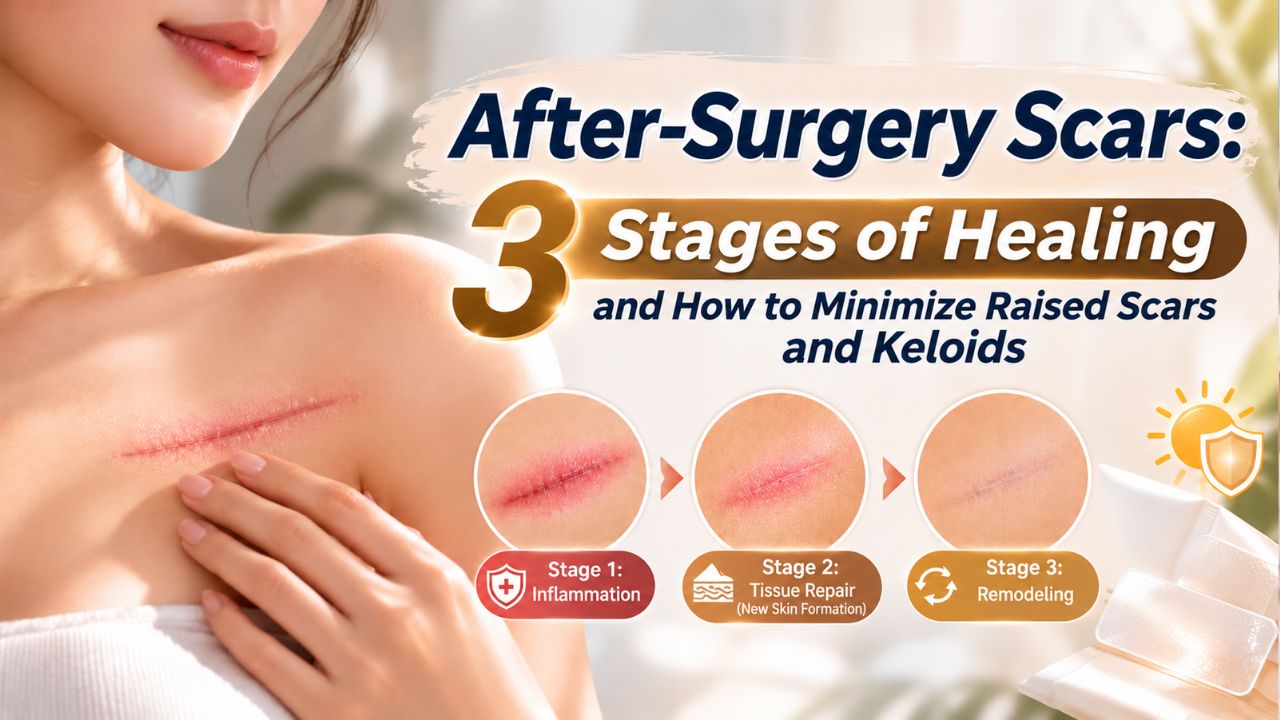
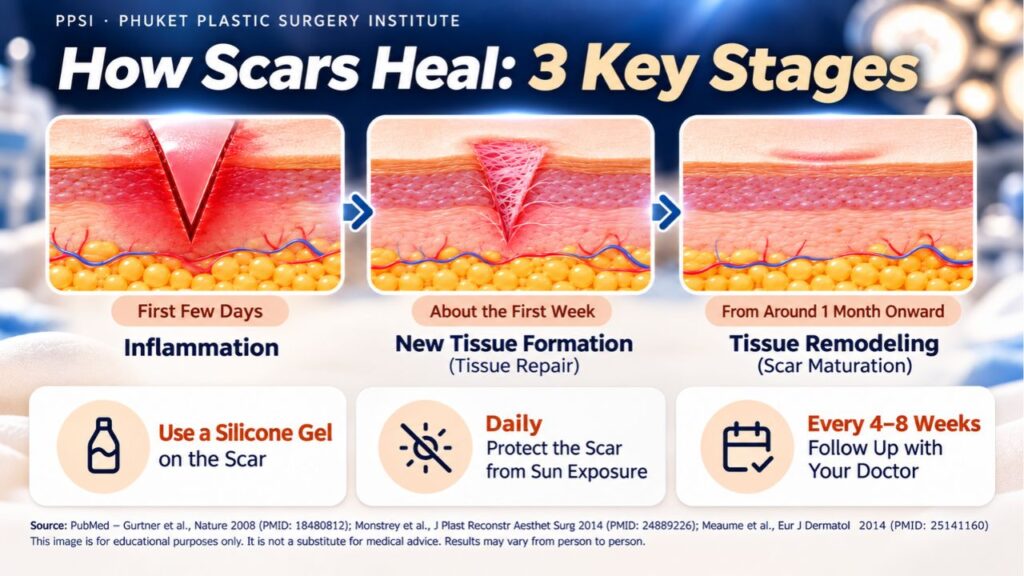
When the skin is cut during surgery, the body immediately begins repairing. Many types of cells and chemical substances in the body work together. In adults, deep skin layer repair ends with a "scar," which is fibrous tissue that is not exactly the same as original skin. This process is divided into 3 overlapping stages.
Stage 1: Inflammatory Phase
In the first few days, the body stops bleeding by causing blood to clot. Then white blood cells come in to eliminate pathogens and damaged tissue fragments. Swelling, redness, warmth, and mild pain around the wound are therefore normal.
Abnormally thick and raised scars result from a wound healing process that deviates from normal and can occur when the wound extends deep into the dermis. Caring for the wound so it heals smoothly from the start—such as preventing infection and preventing the wound from separating—is therefore a crucial foundation.
Stage 2: Proliferative Phase
Skin cells migrate to cover the wound surface. At the same time, repair cells create collagen (a protein that acts like a strengthening scaffold for the skin) and new tissue, along with building new capillaries to supply the wound area. During this period the wound is clearly red or pink, and may feel tight or itchy, which is a sign that the body is diligently building tissue.
Stage 3: Remodeling / Scar Maturation Phase
This stage is the longest and is often overlooked. Collagen that the body hastily produced earlier is reorganized. Excess blood vessels decrease. The scar gradually flattens, softens, and fades. A report in the journal Nature states that this stage begins within a few weeks after injury and may continue for a year or longer.
In practice, surgeons typically take about 12–18 months to assess whether a scar is "fully mature" or not. Therefore, one should not judge results from the appearance of the scar in the first few months.
When understood this way, expectations can be more appropriate. A scar that is still red in months 2–3 does not always mean the scar will turn out poorly, and this period is the "golden window" in which proper care has the greatest effect on the long-term scar.
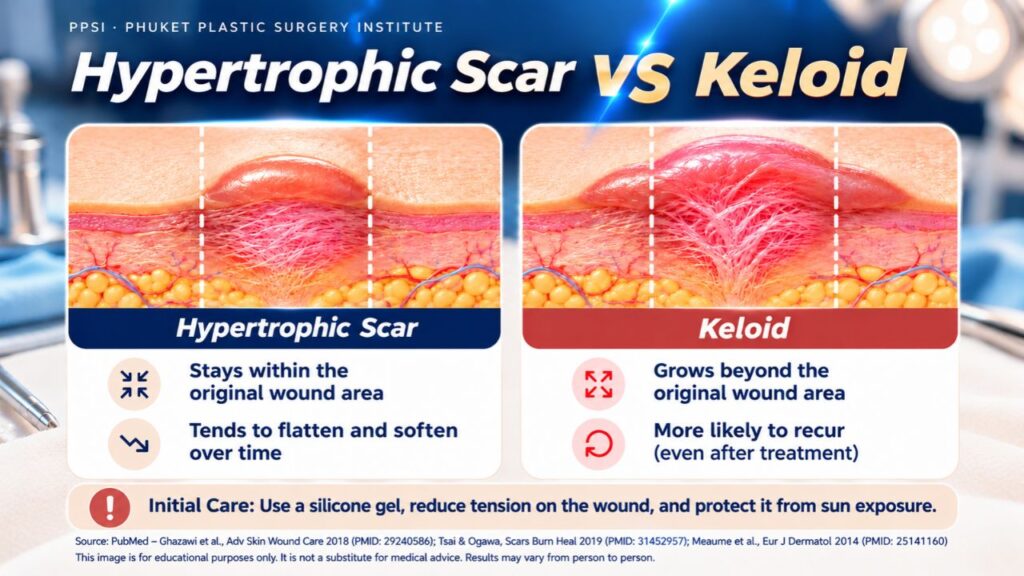
How Are Hypertrophic Scars and Keloids Different?
Both types result from abnormal wound healing. Shared characteristics are being a raised lump or plaque, firm, red, possibly painful or itchy, and they can significantly affect quality of life and confidence. Research shows that both occur when wounds extend deep into the dermis and may cause pain, itching, or skin tightness that restricts movement. However, the two types differ in both visible characteristics and cellular-level mechanisms.
Even physicians themselves sometimes find it difficult to distinguish these two types. Therefore, a plastic surgeon or dermatologist should be the one to evaluate.
Risk Factors for Abnormal Scarring
From a compilation of research on keloids, it is found that the occurrence and growth of hypertrophic scars and keloids involve multiple factors.
1. Genetics: Differences in genes and gene function that may be involved have been found. Those who have had keloids themselves or have family members with keloids should inform the doctor before surgery.
2. Body systems: Hormone levels and certain inflammatory conditions may worsen scars.
3. Local factors, especially skin tension: This is one of the most important factors. Tension acting on the wound and the cells' response to that force may result in scarring, skin tightness, and cause keloids to spread.
Those with multiple risk factors should receive a more intensive prevention plan than the general population, which aligns with international guidelines that recommend tailoring care to each individual's risk.
Evidence-Based Methods to Reduce Post-Surgical Scars
International guidelines developed by multidisciplinary experts from around the world recommend starting scar prevention before, during, and immediately after surgery. In addition to appropriate surgical techniques, this includes reducing skin tension, using wound-closing tape, providing moisture, and protecting the scar from sunlight in the early period.
1. Silicone Gel and Silicone Sheets
International guidelines recommend silicone products, both sheets and gel, as the first-line option because they do not require invasive methods, can be used for both prevention and treatment of hypertrophic scars and keloids, and are supported by research.
1) When the results of 6 trials comparing with control groups were pooled and analyzed, it was found that topical silicone gel significantly helped post-surgical scars become less dark, less raised, and less firm compared with placebo or no treatment. Gel and silicone sheets gave similar results.
2) When research on commonly available topical scar products was compiled, it was found that silicone has the most high-quality trial support, while evidence for onion extract, vitamin E, and other products remains limited.
Gel is convenient for the face or areas that move frequently, while silicone sheets are suitable for long wounds on the body. The most important thing is consistent use.
2. Reducing Wound Tension
Tension is an important factor in the development of hypertrophic scars and keloids. Reducing tension can therefore begin in the operating room, such as placing the wound along natural skin lines and closing in multiple layers, and continue after surgery with:
1) Using wound-closing tape of the type recommended by the doctor for the specified duration.
2) Avoiding heavy lifting, stretching, or forceful twisting of the area with the wound, according to the recommendations for each type of surgery.
3) Wearing compression garments or post-surgical bras as instructed by the doctor to help support the tissues.
3. UV Protection: Especially Important in Phuket
Scars that are not yet mature are much more sensitive to sunlight than normal skin. International guidelines therefore include avoiding sun and UV protection in scar prevention measures. Sunlight stimulates post-inflammatory hyperpigmentation (PIH) on the wound, making the scar appear more prominent even if it is already flat.
Phuket is a coastal city with strong sun year-round. Those recovering here should:
1) Cover the wound with tape or silicone sheets together with clothing that covers the wound area.
2) Once the wound is fully closed and the doctor permits, apply sunscreen to the scar regularly and reapply when outdoors for extended periods.
3) Avoid intense sun during midday, use umbrellas and wide-brimmed hats, and choose activities in shaded areas.
4. Additional Treatments When Necessary
For those at high risk or who are beginning to develop raised scars, doctors may consider deeper treatments such as steroid injections into the scar, 5-fluorouracil (5-FU) injections, laser treatment, or surgical revision, including pressure therapy and radiation in some cases. These may be used alone or in combination. The choice of method depends on the scar characteristics, risk, and individual response, and must be performed only by a specialist physician.
Follow-Up: Why Consistent Wound Checks Are Necessary
International guidelines emphasize that one important element is periodic re-evaluation of the wound every 4–8 weeks to determine whether care methods need to be added or adjusted. Scar care should be tailored to each person's risk, including the patient's level of concern about the scar's appearance.
See a doctor before the scheduled appointment if these signs occur:
1. The scar is increasingly raised, firmer, or extends beyond the original wound margins.
2. Persistent increasing itching or pain.
3. The wound is very red, has pus, fever, or the wound has separated, which may be a sign of infection.
4. Dark discoloration on the scar clearly darkens after sun exposure.
How PPSI Cares for You
At the Phuket Plastic Surgery Institute (PPSI), scar care begins at the pre-surgical consultation. The plastic surgery team will ask about a history of hypertrophic scars or keloids, examine skin condition and scar location, and plan the wound orientation appropriate for each person. After surgery, the medical and nursing team will provide guidance on wound care, selection of silicone products, tension reduction, and sun protection suited to recovery in Phuket, along with scheduled follow-up appointments.
Whether each treatment is suitable depends on individual assessment by a board-certified plastic surgeon, and there is no guarantee that scars will turn out the same in everyone.
Frequently Asked Questions (FAQ)
When can silicone gel be started after surgery?
Generally, it can be started when the wound is fully closed—meaning the skin surface is smoothly closed, there are no open scabs, no serous oozing, and stitches have been removed, or the doctor has examined and confirmed readiness. International guidelines recommend silicone as the first-line option and recommend starting prevention measures from the early post-surgical period.
How to use: Clean and dry the wound, apply a thin layer of gel or place a sheet covering the wound. Use daily continuously for several months as advised by the doctor. If a rash or irritation occurs, stop using and consult the doctor.
How are hypertrophic scars and keloids different?
Hypertrophic scars remain within the boundaries of the original wound and have some chance of flattening over time. Keloids spread beyond the wound margins onto normal skin, are difficult to flatten on their own, and can recur after removal. The two types have different cellular-level mechanisms, and sometimes they are difficult to distinguish, so a doctor should evaluate.
Do other scar creams, such as onion extract or vitamin E, work?
When research was compiled, it was found that evidence for onion extract, vitamin E, and certain other products remains limited, while silicone has more high-quality trial support. If you wish to use other products as well, consult the doctor first to avoid irritation that may cause more wound inflammation.
Can people who have had keloids undergo surgery?
Surgery is possible in many cases, but a history must be reported to the plastic surgeon in advance because genetics and skin tension contribute to keloid formation. The doctor may adjust the wound orientation, choose a closure method that reduces tension, and plan more intensive scar prevention from the start.
Post-surgical scars result from the 3 stages of wound healing, with the final stage of smoothing the scar possibly taking years. Understanding the difference between hypertrophic scars and keloids, and evidence-based care—namely silicone gel or silicone sheets, tension reduction, sun protection, and regular follow-up appointments—helps increase the chance that the scar will turn out as well as possible.
If you are planning surgery or are concerned about scarring, consult a PPSI doctor for an individual assessment.
Note: This article is intended for general educational purposes and cannot replace diagnosis or advice from a physician. Treatment and outcomes depend on individual assessment.