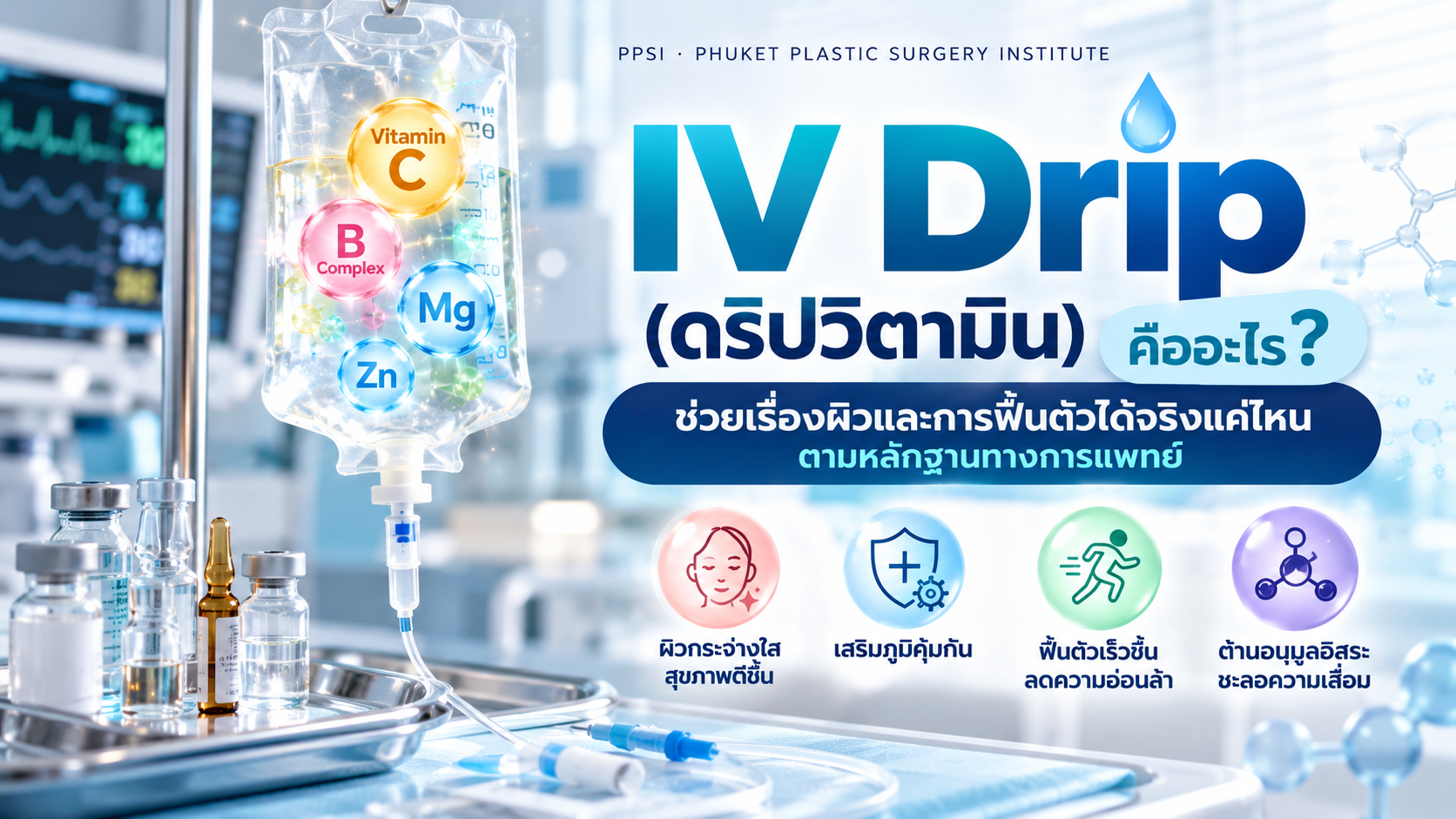
November is a time when many people want to prepare their skin and body for year-end festivals, parties, travel, and family gatherings. IV Drips or IV Vitamin Therapy are often advertised as helping skin look brighter, refreshed, and speeding up recovery.
Principles of IV Drip: Intravenous Micronutrient Therapy and Bioavailability
Intravenous Micronutrient Therapy refers to delivering vitamins, minerals, and fluids directly into a vein through a needle or intravenous line. The core concept lies in "bioavailability," which refers to the proportion of nutrients that enters the bloodstream and becomes readily available for bodily use. When taken orally, nutrients must undergo intestinal absorption, which has inherent absorption limitations, whereas intravenous administration bypasses the gastrointestinal absorption step.
The clearest example is Vitamin C. A pharmacokinetic study in healthy volunteers found that an oral dose of 1.25 grams yielded an average peak plasma concentration of around 134.8 µmol/L. In contrast, the same dose administered intravenously achieved a significantly higher average peak plasma concentration of approximately 885 µmol/L, leading researchers to conclude that the body strictly regulates plasma Vitamin C levels from oral intake.
However, a frequently overlooked issue is that a temporary increase in blood vitamin levels does not prove clinical efficacy. A small randomized placebo-controlled trial on a popular drip formulation like the Myers' Cocktail (comprising B-complex vitamins, Vitamin C, magnesium, and calcium) in 34 fibromyalgia patients found that both the group receiving the vitamin drip and the group receiving ordinary IV fluids felt better compared to baseline, but no statistically significant difference was found between the two groups. This was largely due to a high placebo response. This data reflects that feeling "refreshed" after a drip may result from multiple combined factors rather than the vitamins alone.
Who Might Benefit More?
In medicine, intravenous nutrient administration has a clear role for individuals with malnutrition, intestinal malabsorption, or an inability to consume food orally. However, for healthy individuals who can eat normally, receiving IV drips for "aesthetic" purposes remains an area with weak scientific evidence, a fact that clients should be aware of before making a decision.
Commonly Used Ingredients and Evidence Levels
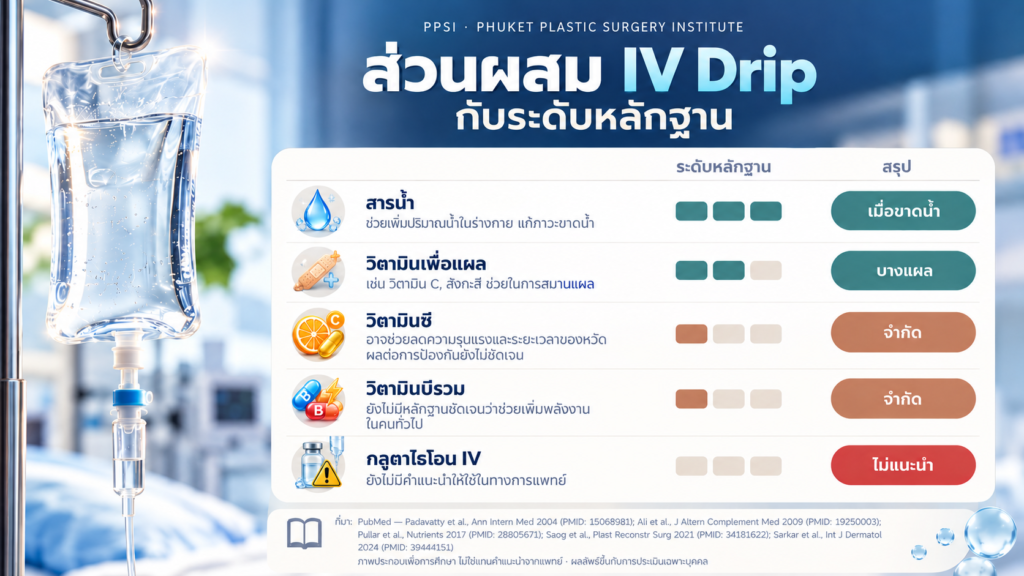
1. Vitamin C and Collagen Synthesis
Normal skin tissue contains high concentrations of Vitamin C, and Vitamin C plays a crucial role in stimulating collagen synthesis as well as protecting cells against UV radiation damage as an antioxidant. This is the biological rationale for using Vitamin C in skincare products and IV drip services.
Nevertheless, there remains a significant evidence gap regarding the efficacy of Vitamin C supplementation on overall skin health, and the skin most likely to show clear benefits belongs to individuals with inadequate dietary Vitamin C intake. In other words, if body Vitamin C levels are already sufficient, adding high doses may not yield the expected skin enhancement outcomes.
2. Vitamins, Minerals, and Wound Healing
Regarding whether vitamins help wounds heal faster, a plastic surgery journal compiled 36 studies involving 2,339 patients utilizing oral, topical, and intravenous vitamins and minerals. The findings indicated that certain nutrients yielded positive results in specific wound types, such as Vitamin C combined with zinc for pressure ulcers.
However, researchers emphasized that there are no official guidelines recommending the use of vitamins and minerals to accelerate general surgical wound healing, and further studies are needed. The practical conclusion is that good nutrition is essential for post-procedure recovery, but IV vitamin drips are not a proven shortcut to accelerate surgical wound healing in healthy individuals.
3. Glutathione
Glutathione is an antioxidant naturally synthesized by the human body and is widely popular as a "skin-lightening" agent. In 2024, it was found that topical and oral glutathione have a certain level of evidence in reducing skin melanin values.
However, for intravenous glutathione, only a single placebo-controlled study exists, and the authors concluded that intravenous glutathione should not be used for skin whitening due to a lack of evidence of efficacy and the presence of side effects. Another publication highlighted that despite widespread advertising of injectable glutathione, long-term safety data remains lacking, along with inherent risks associated with direct intravenous administration.
4. B-Complex Vitamins and IV Fluids
B-complex vitamins are a core component in many drip formulations, including the Myers' Cocktail. These vitamins are essential for energy metabolism processes, but controlled trials involving this formulation have not demonstrated a clear difference compared to placebo. As for intravenous fluids (IV Fluids), they effectively correct dehydration in dehydrated individuals; however, for those who drink water normally, adequate oral fluid intake remains a simpler and safer choice.
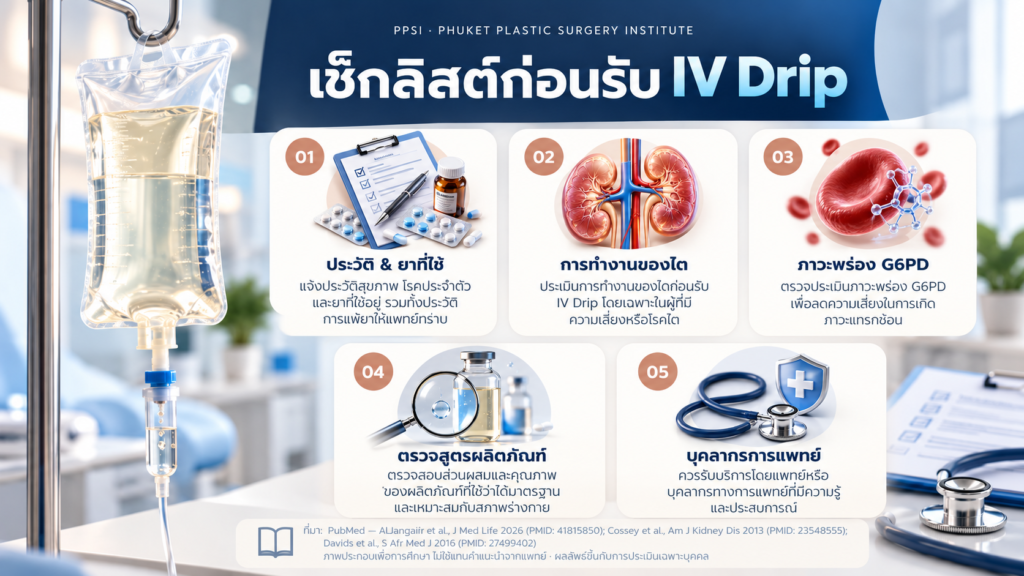
Pre-IV Drip Health Screening: An Unignorable Safety Measure
Although vitamin drips appear to be a simple wellness service, intravenous administration is a medical procedure. Reports on high-dose IV Vitamin C highlight two major safety risks: oxalate nephropathy (kidney damage caused by oxalate crystals) and hemolysis in individuals with G6PD deficiency, particularly when using very high doses or repeated administrations, and pre-screening is recommended to mitigate risks.
- Kidney Function Evaluation: Vitamin C metabolizes into oxalate within the body, and cases of acute kidney failure caused by calcium oxalate crystals following IV Vitamin C administration have been reported. Individuals with kidney disease, a history of kidney stones, or other risk factors should have their kidney function evaluated prior to receiving treatment and may not be suitable for high-dose Vitamin C.
- G6PD Deficiency Screening: G6PD deficiency is a genetic condition that many people are unaware they possess. Individuals with this condition can experience red blood cell hemolysis when exposed to high doses of Vitamin C. Therefore, blood screening prior to receiving high-dose Vitamin C is an essential preventive measure.
- Medication History and Underlying Conditions: Physicians should evaluate all active medications, including dietary supplements, herbal products, heart conditions, restrictions on fluid/electrolyte intake, pregnancy/lactation, and drug allergy history, as these factors directly impact the types and dosages of substances that are safe to use.
- Intravenous Cannulation Risks: Intravenous administration carries inherent risks, such as bruising, phlebitis, fluid extravasation, and infection. Articles on injectable glutathione specifically highlight concerns regarding intravenous complications, particularly when products originate from unstandardized sources. Thus, using sterile techniques, properly registered products, and monitoring during infusion are indispensable.
IV Drip and Pre-Festive Recovery Programs: The Importance of Medical Personnel
When considering all medical evidence, vitamin drips should be viewed as a "supplement" rather than the "core pillar" of pre-festive skin preparation and body rejuvenation. The foundation supported by stronger evidence remains adequate sleep, sufficient water intake, a balanced diet rich in fruits, vegetables, and protein, sun protection, and skin care appropriate for one's skin type.
For individuals who have recently undergone cosmetic or surgical procedures, intravenous fluids or vitamin administration should remain under the decision of the attending plastic surgeon, as the physician understands the medications used, health conditions, and wound healing stages. If a true nutritional deficiency is identified through testing, targeted correction of that deficiency is far more logical than applying a single standardized formula to everyone.
What to Look for When Receiving Service:
1.Detailed medical history taking and health screening by a physician prior to every administration.
2.Administration performed by trained nurses or medical personnel in a facility equipped with emergency resuscitation equipment.
3.Transparent explanations regarding benefits, limitations, and risks without guaranteeing results.
How PPSI Cares for You
At Phuket Plastic Surgery Institute (PPSI), we prioritize personalized evaluation before recommending any service. For those interested in vitamin drips within a Pre-Festive Recovery program, our medical team will take a detailed health history, analyze current medications, and consider necessary screening tests (such as kidney function and G6PD screening) in cases where high-dose Vitamin C is planned, while providing honest explanations of evidence levels to help you make an informed decision.
Year-end in Phuket is ideal for relaxation, allowing you to combine skin care and post-operative follow-up with the medical team into a single trip under the care of qualified medical professionals.
An IV Drip can achieve higher blood levels of certain vitamins than oral intake, but evidence supporting aesthetic skin improvements or faster wound healing in healthy individuals remains limited, and certain formulas like injectable glutathione raise safety concerns. Sound decision-making begins with accurate information, kidney and G6PD screening, and service delivered by medical personnel. If you are planning pre-festive skin preparation, consult a PPSI expert physician for a personalized evaluation to select the approach best suited for you.
Note: This article is intended for general informational purposes only and cannot replace medical diagnosis or advice from a physician. Treatments and results depend on individual evaluation.
Frequently Asked Questions (FAQ)
Q: Who is IV Drip suitable for, and what should be screened before receiving the service?
A: IV Drip is most suitable for individuals evaluated by a doctor to have medical indications, such as dehydration, specific nutrient deficiencies, or inadequate oral intake. For healthy individuals seeking cosmetic benefits, it is important to understand that current evidence is limited. Before receiving the service, the following steps should be completed: 1) History taking of medical conditions, medications, and drug allergies; 2) Kidney function evaluation; 3) G6PD deficiency screening prior to high-dose Vitamin C; 4) Verification of ingredient types and dosages in the formula; and 5) Receiving treatment in a medical facility with physician supervision.
Q: Does an IV Drip really help surgical wounds heal faster?
A: Currently, there is no strong evidence that vitamin drips help surgical wounds heal faster in healthy individuals. Certain vitamins and minerals provide benefits in specific wound types (such as Vitamin C and zinc for pressure ulcers), but there are no official guidelines recommending their use for general wound healing acceleration. Although Vitamin C is essential for collagen synthesis, if the body already has adequate levels, increasing the dose may not provide additional benefits. Following physician wound care instructions and maintaining balanced nutrition remain the core priorities.
Q: Does injectable glutathione really whiten the skin?
A:Evidence for intravenous glutathione is extremely scarce, and it should not be used for skin whitening due to a lack of efficacy evidence and the presence of side effects. Furthermore, long-term safety data is currently lacking. If you are concerned about dull skin or melasma, it is recommended to consult a doctor to choose treatments backed by stronger scientific evidence.
References (PubMed)
[1]Padayatty SJ, Sun H, Wang Y, et al. Vitamin C pharmacokinetics: implications for oral and intravenous use. Ann Intern Med. 2004;140(7):533-7. doi:10.7326/0003-4819-140-7-200404060-00010. PMID: 15068981. https://pubmed.ncbi.nlm.nih.gov/15068981/
[2]Ali A, Njike VY, Northrup V, et al. Intravenous micronutrient therapy (Myers' Cocktail) for fibromyalgia: a placebo-controlled pilot study. J Altern Complement Med. 2009;15(3):247-57. doi:10.1089/acm.2008.0410. PMID: 19250003. https://pubmed.ncbi.nlm.nih.gov/19250003/
[3]Pullar JM, Carr AC, Vissers MCM. The Roles of Vitamin C in Skin Health. Nutrients. 2017;9(8):866. doi:10.3390/nu9080866. PMID: 28805671. https://pubmed.ncbi.nlm.nih.gov/28805671/
[4]Saeg F, Orazi R, Bowers GM, et al. Evidence-Based Nutritional Interventions in Wound Care. Plast Reconstr Surg. 2021;148(1):226-238. doi:10.1097/PRS.0000000000008061. PMID: 34181622. https://pubmed.ncbi.nlm.nih.gov/34181622/
[5]Sarkar R, Yadav V, Yadav T, et al. Glutathione as a skin-lightening agent and in melasma: a systematic review. Int J Dermatol. 2024;64(6):992-1004. doi:10.1111/ijd.17535. PMID: 39444151. https://pubmed.ncbi.nlm.nih.gov/39444151/
[6]Davids LM, Van Wyk JC, Khumalo NP. Intravenous glutathione for skin lightening: Inadequate safety data. S Afr Med J. 2016;106(8):782-6. doi:10.7196/SAMJ.2016.v106i8.10878. PMID: 27499402. https://pubmed.ncbi.nlm.nih.gov/27499402/
[7]Alangari A, Arif J, Al Qureshah F, et al. Clinical benefits and risks of high-dose intravenous vitamin C: a systematic review. J Med Life. 2026;19(1):16-23. doi:10.25122/jml-2025-0176. PMID: 41815850. https://pubmed.ncbi.nlm.nih.gov/41815850/
[8]Cossey LN, Rahim F, Larsen CP. Oxalate nephropathy and intravenous vitamin C. Am J Kidney Dis. 2013;61(6):1032-5. doi:10.1053/j.ajkd.2013.01.025. PMID: 23548555. https://pubmed.ncbi.nlm.nih.gov/23548555/