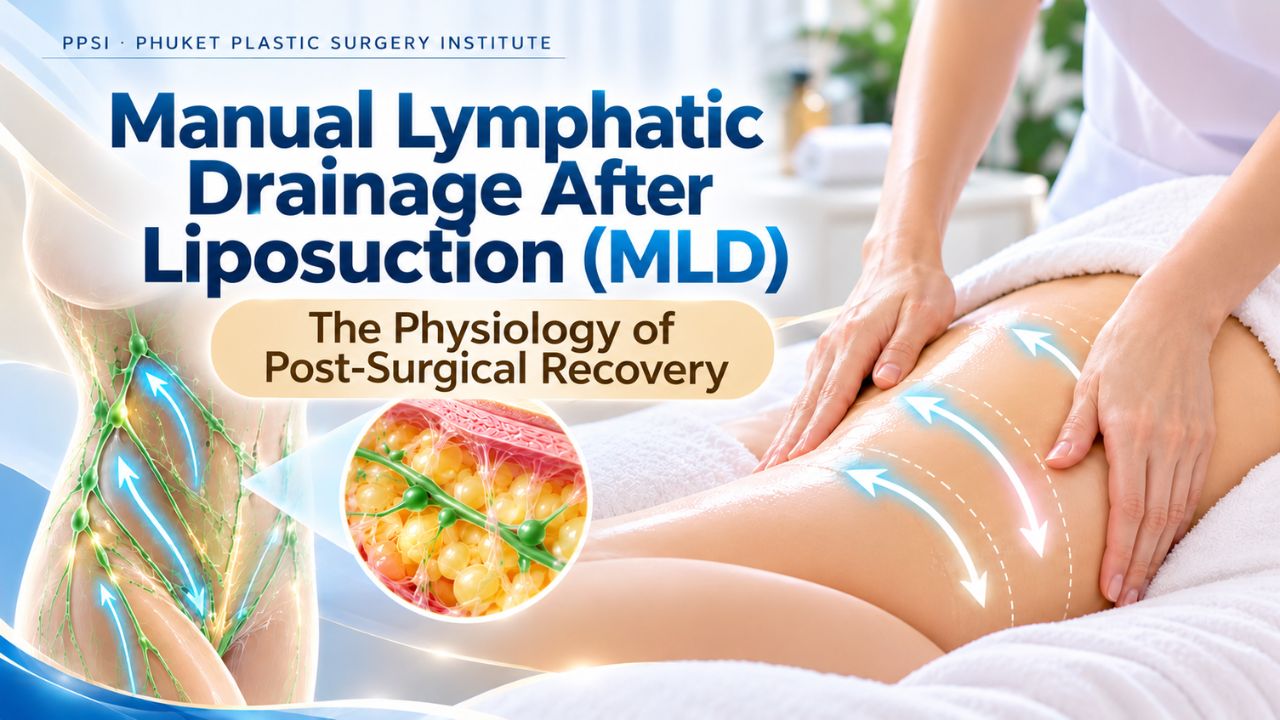
Many people decide to undergo liposuction to achieve a firmer shape and fit into a nice outfit for year-end events. But after surgery, what people worry about most is "why am I still swollen?" and "will there be hard lumps or fibrosis?" Many surgeons and physical therapists therefore recommend Manual Lymphatic Drainage (MLD) after liposuction.
The Subcutaneous Lymphatic System and the Effects of Liposuction
How the lymphatic system works
The lymphatic system is a network of small vessels throughout the body that helps drain excess fluid from tissues and helps deal with inflammation or foreign substances in the area. Normally, this system drains fluid in time, but if drainage cannot keep up, fluid accumulates in the tissues and causes swelling.
Under the skin, there are superficial lymphatic vessels close to the surface—the same area where surgeons perform liposuction.
How liposuction affects lymphatic vessels
Liposuction involves inserting a small tube into the fat layer to suction out fat. The tissue therefore becomes inflamed as a natural response to surgery, and some lymphatic vessels may also be disturbed.
There is a study conducted on cadavers examining the effects of liposuction on the legs on lymphatic vessels. It found that suctioning perpendicular to the leg axis caused significantly more lymphatic vessel injury than suctioning parallel to the leg axis. The researchers concluded that longitudinal suction is unlikely to severely damage superficial lymphatic vessels, indicating that the surgeon's technique also affects the lymphatic system.
Another study was conducted in 50 patients with abnormal fat accumulation in the legs and arms (Lipoedema), in which a tracer was injected and lymphatic flow was scanned before and after Tumescent liposuction (injecting solution into the fat layer before suctioning) over 6 months. The result was that lymphatic system function did not worsen. This patient group is not the same as people undergoing liposuction purely for cosmetic reasons, but it suggests that when performed appropriately, changes in the lymphatic system are usually only temporary, not permanent damage.
What causes swelling, bruising, and fibrosis?
After liposuction, inflammatory fluid, blood that seeps into the tissues, and lymph fluid that drains more slowly combine to cause swelling, bruising, and pain. A 2026 review that compiled results from multiple studies indicated that cosmetic surgeries such as liposuction and abdominoplasty often disturb the lymphatic system, leading to problems including swelling, pain, fibrosis, and lymph fluid accumulation as a pocket under the skin (seroma).
If inflammation and swelling persist for a long time, the tissue may form fibrosis, making it feel like a hard lump or causing uneven skin.
How is MLD different from general massage?
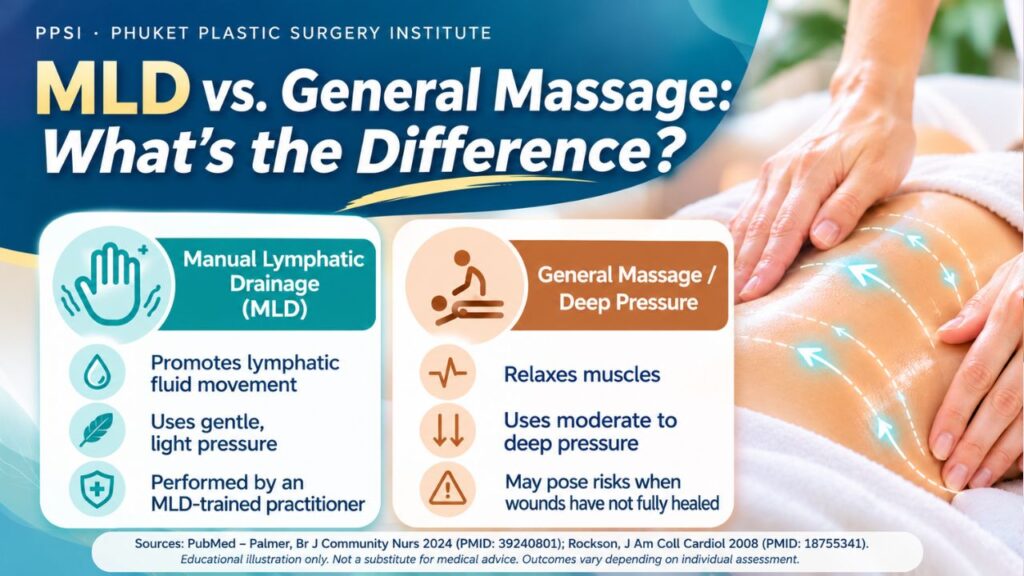
MLD is a specialized form of massage that uses light hand contact to stimulate lymph fluid to flow in the proper direction. It is normally used to treat swelling of the arms and legs from lymphoedema, for which the main care approach is a combination of physical therapy methods such as massage, wearing compression garments, and light exercise.
After liposuction, the tissue is still inflamed and healing. Massaging with strong pressure on your own may cause more pain or bruising. Therefore, massage should only be done under the guidance of the medical team.
When to start, how many sessions, and what the evidence says
Timing and number of sessions
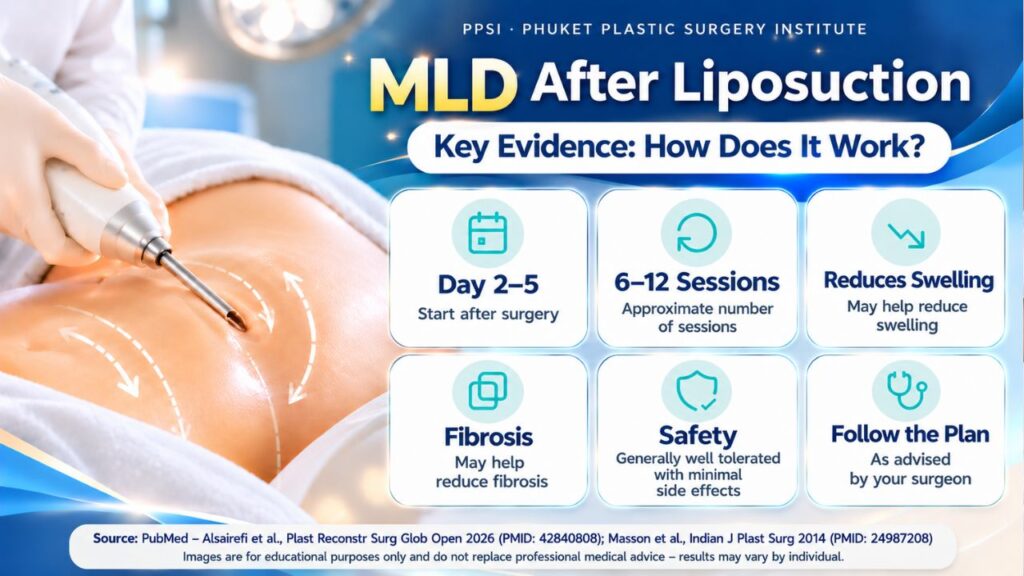
There is a review that compiled results from 7 studies in people who underwent cosmetic surgery, mostly liposuction and abdominoplasty. It found that MLD gave better results when started early, during days 2–5 after surgery, and performed approximately 6–12 times, with very few side effects found.
However, these numbers are an overall picture from research, not a schedule that applies to everyone. Surgeons will consider several factors together, including the size of the area suctioned, wound condition, drains, and each person's symptoms.
How much can it reduce swelling and pain?
1. Reducing swelling: A review compiling results from multiple studies concluded that MLD helps reduce swelling after cosmetic surgery to a moderate degree, but results vary by type of surgery, and further well-designed studies are still needed.
2. Pain: Results are still inconsistent. Some studies found reduced pain; some studies found no clear difference.
Can it reduce fibrosis?
The evidence says it "may help," but it is not yet strong. There was a study in 18 women with fibrosis in the abdominal and flank areas after liposuction combined with abdominoplasty. It found that using high-frequency ultrasound therapy (therapeutic ultrasound) together with MLD for a total of 12 sessions clearly reduced pain, swelling, and fibrosis. However, this study had no comparison group that did not receive treatment and also used ultrasound, so it cannot tell how much of the benefit came from MLD.
Overall, the effect on fibrosis is therefore at the level of "a tendency to help, but not yet consistent."
In addition, there is a randomized study in people with cellulite after liposuction comparing groups and finding that Shock Wave therapy reduced cellulite severity and subcutaneous fat thickness more than MLD. This shows that MLD is not the only answer for every skin problem after surgery.
Compression garments and MLD
Compression garments are another important part of postoperative care, but research data still have several angles. There was a study in 32 patients who underwent abdominoplasty, all of whom received MLD 10 times, randomized into groups. It found that the group that did not wear compression garments had a smaller waist circumference than the group that did, at 35 days after surgery.
This result comes from abdominoplasty, not liposuction directly, and does not mean patients should stop wearing compression garments on their own. Patients should always follow their surgeon's recommendations.
PPSI Treatment Program
For those undergoing liposuction before the festival season, PPSI — Phuket Plastic Surgery Institute — has a program that helps make recovery systematic, with the following main concepts:
1. Individualized preoperative assessment: Planning the areas to be suctioned and scheduling the surgery date in relation to important dates, allowing time for swelling to gradually subside.
2. Collaborative MLD planning: The surgeon and physical therapist determine the start time, frequency, and number of sessions based on wound condition and each person's symptoms.
3. Holistic care: Wearing compression garments as recommended by the doctor, moving the body gently, drinking water, and attending follow-up appointments as scheduled.
4. Recovery in Phuket: The year-end period is a tourist season with relatively dry weather, suitable for resting during recovery.
The speed of swelling resolution differs among individuals, and results cannot be guaranteed.
Frequently Asked Questions (FAQ)
When can I start lymphatic drainage after liposuction?
Generally, it can be started in the early postoperative period when the surgeon permits. A review compiling results from multiple studies found better results when started on days 2–5 after surgery and performed approximately 6–12 times. The recommended steps are:
1. Wait for the surgeon to examine the wound and drains first.
2. Have MLD done by a physical therapist or someone specifically trained.
3. Use light pressure according to MLD principles; do not press hard.
4. Wear compression garments and take care of yourself as recommended by the doctor.
5. Inform the doctor immediately if there is fever, increased pain, or abnormal red, hot swelling.
Does MLD really reduce fibrosis?
There is a tendency that it may help, but the evidence is not yet strong. Research found that MLD reduces swelling to a moderate degree, while effects on fibrosis and pain are still inconsistent. The study that clearly showed reduced fibrosis used MLD together with ultrasound therapy. Therefore, MLD should be part of a postoperative care plan, not the only method. If you feel hard lumps or uneven skin, you should have a doctor examine you to choose the appropriate treatment.
Can I massage myself at home?
It is not recommended to massage with strong pressure on your own in the early postoperative period because the tissue has not finished healing. MLD is a light massage with a specific sequence and direction. If you want to continue caring for yourself at home, a physical therapist should teach you the correct method, and you should first obtain approval from your surgeon.
Will liposuction cause permanent damage to the lymphatic system?
Generally, changes are usually temporary. A cadaver study found that longitudinal suction of the limbs caused less lymphatic vessel injury than transverse suction, and lymphatic system scanning in Lipoedema patients found that system function did not worsen after Tumescent liposuction. Choosing a surgeon who understands body structure well is therefore important.
Swelling after liposuction is caused by inflammation and temporary disturbance of the lymphatic system. MLD is a light massage that helps lymph fluid flow better. Current evidence supports that it helps reduce swelling to a moderate degree, especially when started early and continued appropriately. The effect on fibrosis still requires further study.
If you are planning liposuction before the year-end festival, consult a PPSI doctor for an individualized assessment and a recovery plan suited to you.
Note: This article provides general knowledge and cannot replace diagnosis or advice from a doctor. Treatment and results depend on individual assessment.