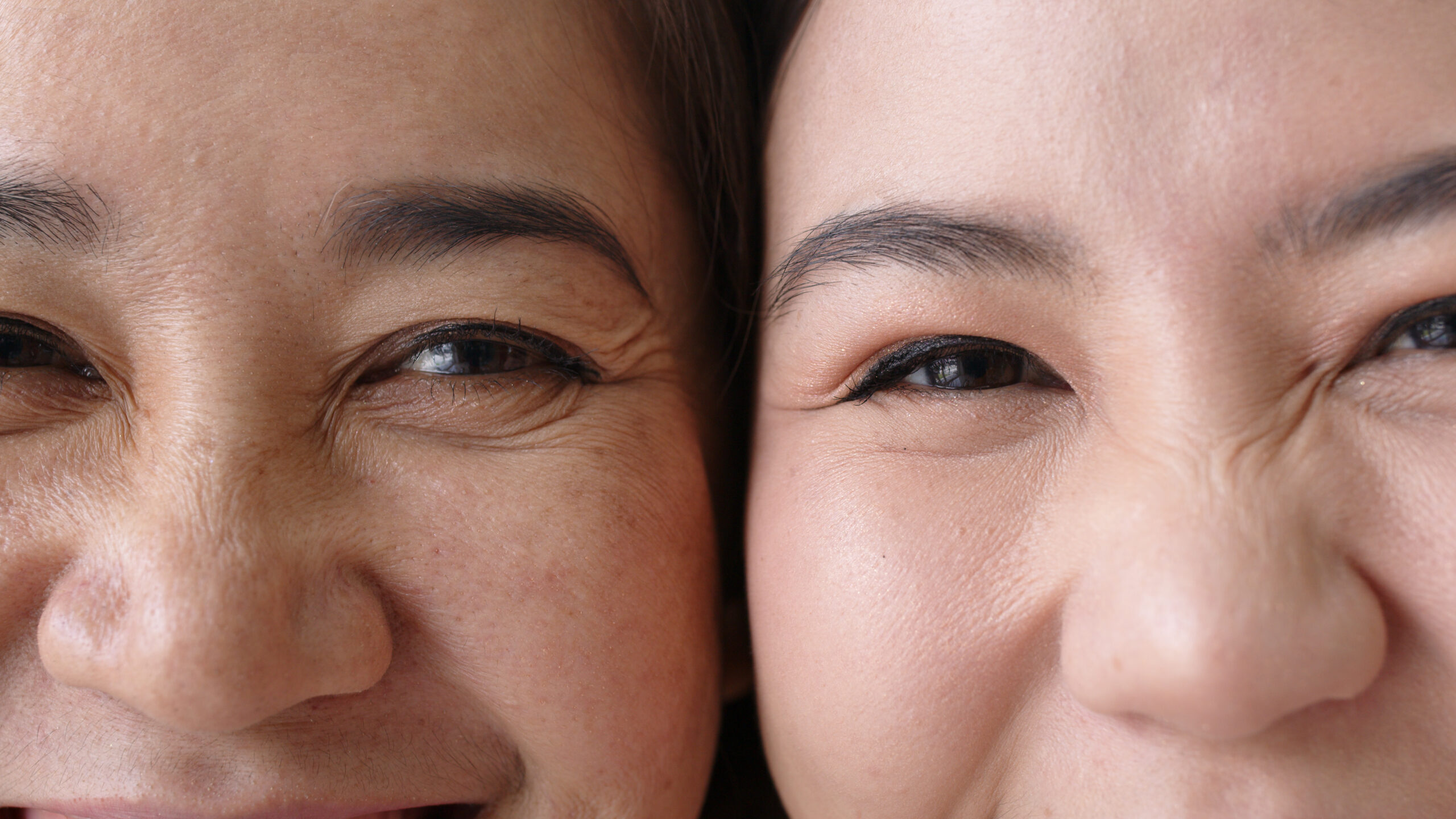
The eyes are often compared to the “windows to the soul” and serve as the focal point of facial charm, helping to enhance the personality and confidence of their owner. In the field of Aesthetic & Reconstructive Surgery, upper eyelid surgery, or blepharoplasty, is considered one of the most popular procedures and has continued to attract widespread interest. However, from the perspective of modern medicine, the true beauty of the eyes does not depend on creating the largest or thickest eyelid crease, but rather on combining anatomical science and surgical artistry to create eyes that are round, bright, and in harmony with each individual’s facial structure in the safest and most natural way possible.
1. The Definition of “Natural Beauty” from a Medical Perspective
Eyes that appear stiff, unnatural, or lack harmony—commonly referred to as “scallop-shaped eyelids”—often result from inaccurate treatment planning and assessment of the anatomical characteristics of the eyelids. In ophthalmology and plastic surgery, the key factors that cause eyes to lose their natural appearance after surgery are as follows:
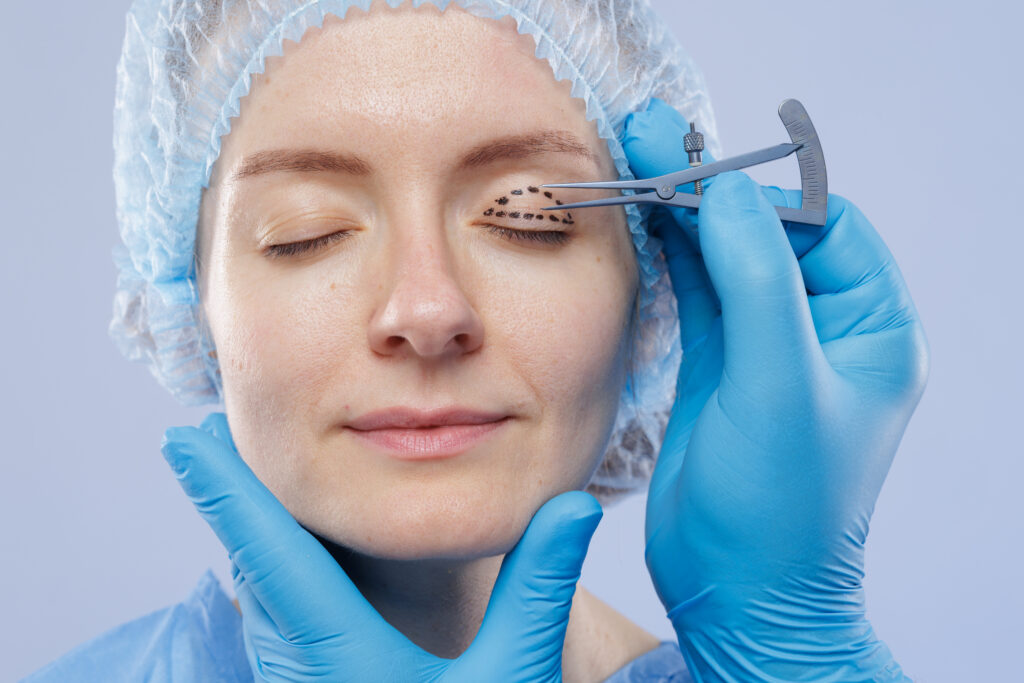
- Improper Crease Height Selection: Asian facial structures typically have a relatively narrow distance between the eyebrow and the eyelid. Forcing an excessively high and wide crease (for example, attempting a Western-style eyelid crease) can cause the eyelid tissue to appear puffy and swollen, as if the person is perpetually sleepy. Specialized surgeons must therefore carefully assess the orbital bone structure and eyebrow distance before designing the procedure.
- Over-resection of Orbital Fat: Removing excessive amounts of fat and tissue beyond what is necessary can cause the eye sockets to appear deeply sunken (Sunken Eyes), making the face look tired, weary, and older than its actual age. In addition, the lack of supporting fat causes the eyelid crease to appear tight, pulled, and lacking in softness.
- Ignored Blepharoptosis: In individuals with ptosis, where the eyelid-lifting muscle does not function fully, the upper eyelid droops down and covers more of the iris than normal. If double eyelid surgery is performed alone without treating the underlying cause, the newly created crease area will appear even larger and thicker, and the eyes will look heavier and more drowsy than before.
- Scar Tissue and Tension: Suturing the wound too tightly or improper wound care may cause scar tissue to adhere in the wrong position, resulting in an uneven, irregular eyelid crease or multiple overlapping folds that become triple eyelids (Triple Eyelids).
2. An In-Depth Look at the Three Main Double Eyelid Techniques
Choosing a surgical technique that aligns with the original eye structure is the key to addressing problems precisely and safely. In general, medical techniques are divided into three main approaches as follows:
Technique 1: Non-Incision / Suture Technique
- Medical Mechanism: This creates an eyelid crease by making approximately three very small punctures in the eyelid. The surgeon then uses a special type of thread to suture and anchor the points together, creating a crease that connects the skin to the underlying eyelid-lifting muscle without any external incision.
- Suitable Candidates: Younger individuals with thin eyelid skin and no accumulated fat or sagging eyelid skin.
- Advantages: The wounds are very small, there is almost no swelling or bruising, and the recovery time is the shortest.
- Limitations: The results are not as permanent as the incision technique. There is a chance that the threads may come loose or the crease may loosen over time, and it cannot create a large crease in individuals with thick eyelids.
Technique 2: Mini / Small Incision Blepharoplasty
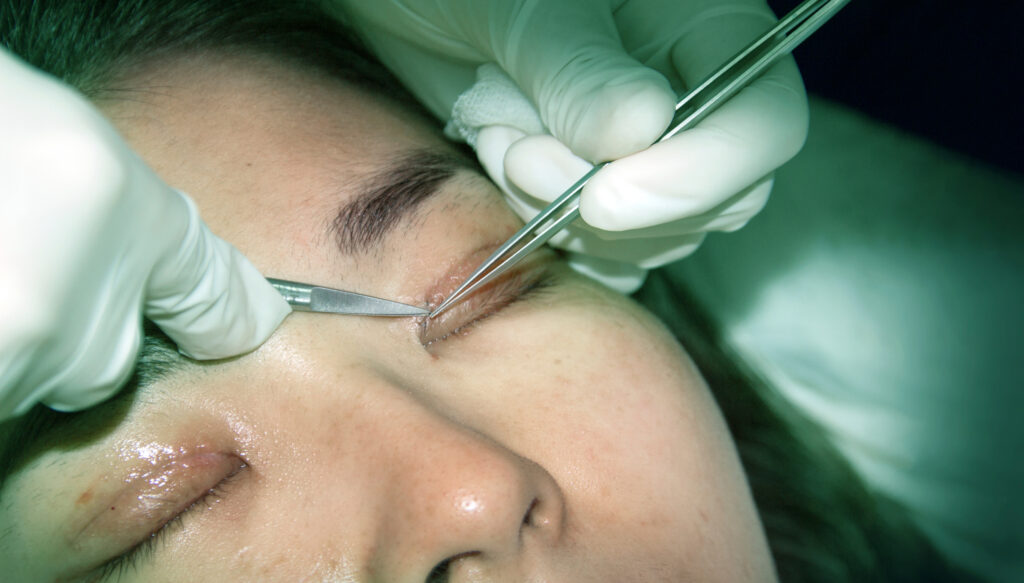
- Medical Mechanism: The surgeon makes a small incision of approximately 0.5–1.5 centimeters in the central part of the eyelid to remove some of the excess fat. The inner eyelid crease is then meticulously sutured and locked to create a more stable eyelid fold.
- Suitable Candidates: Individuals no older than 35 years of age who have firm, taut eyelid skin, no excess sagging eyelid skin, but who desire a clearly defined crease and want some accumulated fat removed.
- Advantages: Very little swelling and bruising. The incision is small and hides neatly within the crease, making the scar virtually invisible once fully healed.
- Limitations: It cannot trim or remove large amounts of sagging upper eyelid skin.
Technique 3: Full Incision with Skin Removal
- Medical Mechanism: The surgeon makes a full-length incision along the crease line from the inner corner to the outer corner of the eye (approximately 2.5 centimeters or more) in order to release old scar tissue, rearrange fat, remove accumulated fat, and completely excise excess sagging upper eyelid skin before closing the wound.
- Suitable Candidates: Individuals with thick eyelids and dense accumulated fat (puffy eyes), drooping eyelid skin that covers the crease, or older adults with pronounced sagging around the eyes.
- Advantages: Achieves a sharp, beautiful, and permanent crease. It can effectively lift drooping outer corners and adjust the curvature of the crease line along its entire length to the highest degree.
- Limitations: The surgery takes longer, involves more swelling and bruising, and requires a longer recovery period for the wound to fully settle compared to the small-incision technique.
3. Advanced Adjunctive Procedures for Personalized Perfection
In many cases, the eye condition may be more complex than simply creating an eyelid crease. Specialized surgeons therefore often recommend performing special procedures alongside double eyelid surgery to achieve the most aesthetically balanced proportions:
- Ptosis Correction: Tightening and adjusting the level of the eyelid-lifting muscle (Levator Aponeurosis) to help the eyelid open and lift more effectively. This corrects droopy, narrowed eyes and sleepy-looking eyes, restoring them to a wide, bright appearance with a more visible iris.
- Inner Corner Eye Extension / Epicanthoplasty: Refining the restraining skin tissue at the inner corner of the eye to widen and elongate the eye shape. This helps the crease line curve smoothly and proportionally from the inner corner to the outer corner, giving a softer, more delicate look.
- Fat Grafting: Using the patient's own fat to rearrange or fill in areas of the eyelid with deep creases or sunken eye sockets, restoring firmness, fullness, and natural smoothness.
- Sub-Brow Lift: A surgical procedure that lifts sagging upper eyelid skin at the outer corner by making an incision hidden close to the lower edge of the eyebrow. It is suitable for individuals who already have a well-defined crease but want to lift and tighten the outer corner without scars on the eyelid.
4. Medical Guidelines: Self-Care for Optimal Results
For double eyelid surgery to be successful with smooth, beautiful scars, discipline in preparation and post-operative care is extremely important:
Pre-operative Care
1. Avoid medications and supplements that interfere with blood clotting: Refrain from taking aspirin, ibuprofen, or blood-thinning medications, as well as all types of dietary supplements such as vitamin E, fish oil, ginseng, and ginkgo for at least 14 days before surgery to prevent excessive bleeding or bruising under the skin.
2. Hygiene and Preparation: Get adequate sleep and rest. Wash your hair thoroughly before the day of surgery, since after the procedure you will need to keep the wound away from water. Avoid wearing makeup and contact lenses on the day of surgery, and prepare sunglasses to wear for protection against dust and particles after the procedure.
Post-operative Care
1. Cold and Warm Compresses: Apply cold compresses around the eyes and forehead during the first 3 days to reduce swelling and oozing. After the 4th day, switch to warm compresses to help with circulation and reduce bruising.
2. Sleep with the Head Elevated: During the first 1–2 nights, sleep with the head elevated higher than usual to reduce swelling at the surgical site.
3. Keep the Wound Clean: Use a clean cotton swab soaked in saline to gently clean the wound area 1–2 times a day, pat it dry, and apply medication as prescribed by the doctor to help reduce the risk of infection.
4. Avoid Foods and Activities That Promote Inflammation: Refrain from fermented foods, spicy foods, seafood, and alcoholic beverages for at least 2 weeks. Also avoid applying makeup around the eyes and wearing contact lenses for the period recommended by the doctor.
5. Timeline for the Crease to Settle: Stitches are typically removed about 7 days after surgery. Swelling will gradually subside, and the crease will begin to take shape more clearly within 1–3 months. However, the recovery time may vary from person to person.
Double eyelid surgery is not about changing the eyes into someone else's, but rather refining anatomical imperfections to restore a youthful appearance and permanently instill a spark of confidence in one's original eyes. In terms of treatment, there is no single technique that is best for everyone—only the technique that is "most suitable" for each individual's eye shape, skin condition, and fat volume. Undergoing a thorough evaluation and surgery performed by a specialized surgeon, together with a medical facility that meets international safety standards such as JCI accreditation, is therefore the most important first step in creating results that are beautiful, delicate, and safe in the long term.
Q&A
Q1: What techniques are available for double eyelid surgery ?
A: There are mainly 3 techniques: the suture technique, the mini incision, and the full incision. The surgeon will select the appropriate technique based on each individual's skin condition, fat volume, and eye structure.
Q2: Can someone with droopy eyes caused by ptosis undergo double eyelid surgery alone ?
A: It is not advisable to perform double eyelid surgery alone, as it may cause the crease to appear thick while the eyes remain droopy. An evaluation should be conducted, and ptosis correction may need to be performed together.
Q3: After double eyelid surgery, how long does it take for the result to settle ?
A: Generally, swelling decreases by approximately 50–60% within 2 weeks, and the crease will gradually settle into a natural appearance over about 1–3 months. This varies from person to person.