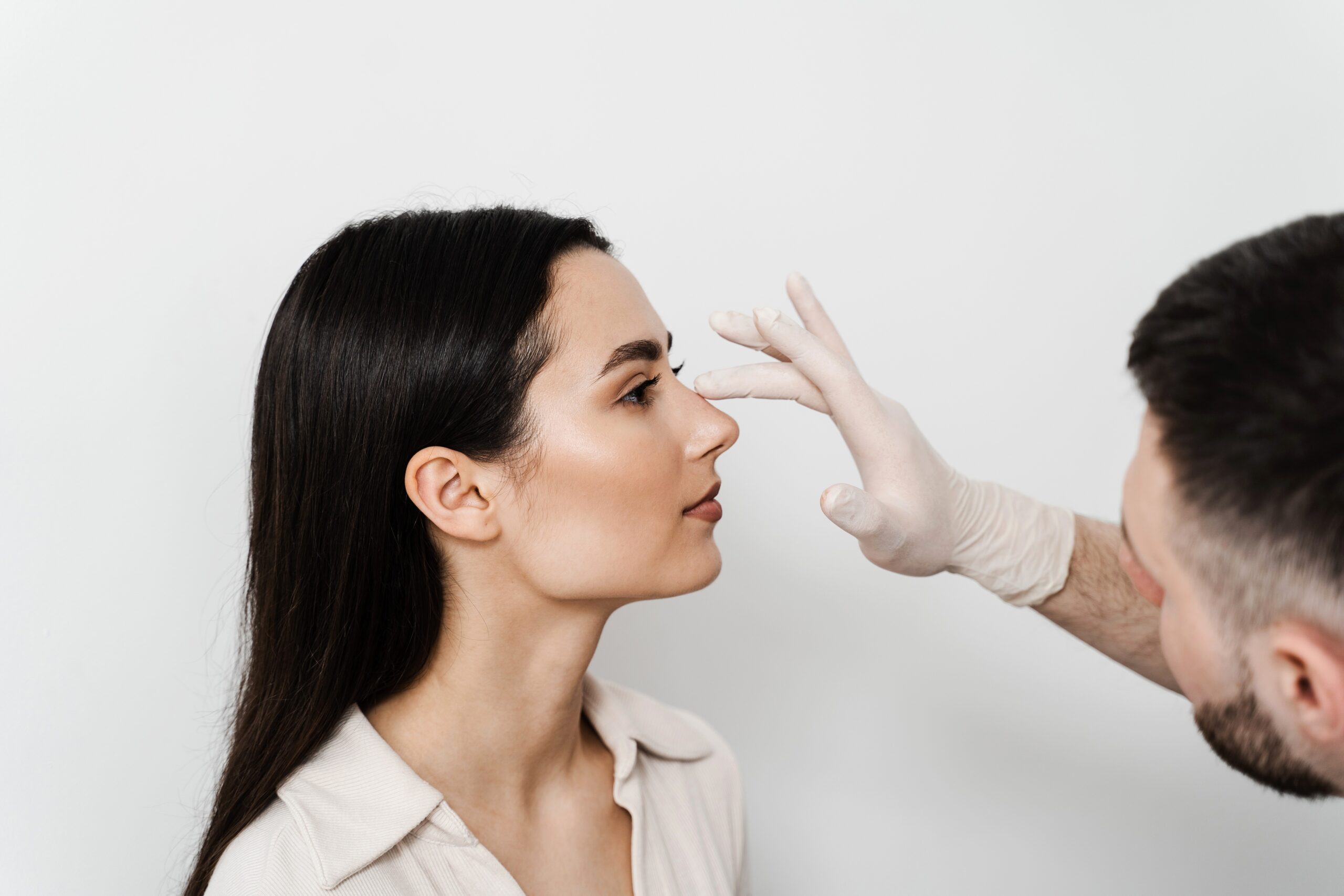
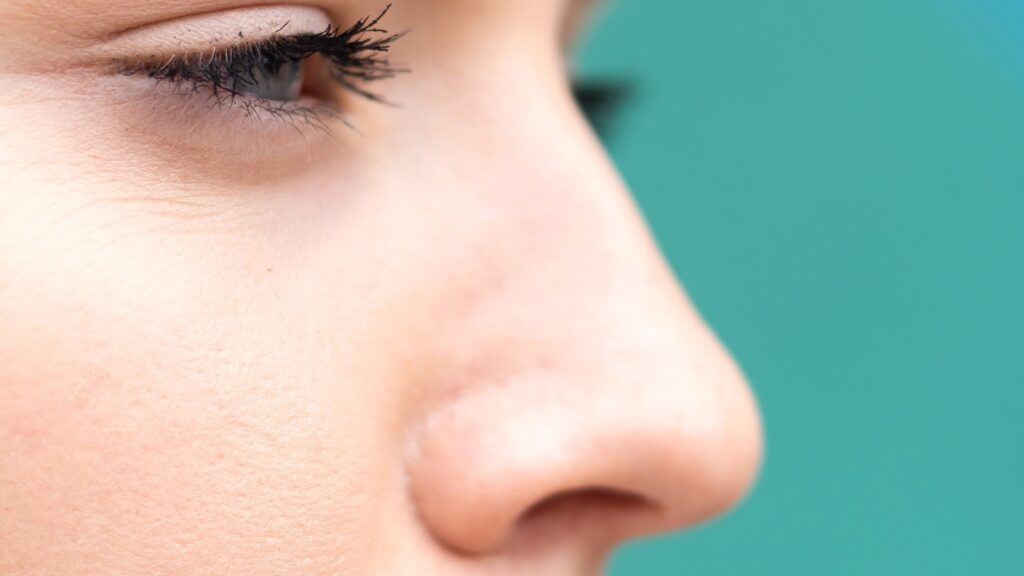
"Revision rhinoplasty" is an essential solution for individuals experiencing complications after an initial nose augmentation, such as a crooked nose, silicone extrusion risk, infection, or an unsatisfactory shape. Today, revision rhinoplasty requires high-level surgical expertise to fully reconstruct the nasal framework, correct previous errors, and deliver beautiful, long-term safe results.
Warning Signs Indicating You Need Urgent "Revision Rhinoplasty"
- Crooked Nose or Asymmetric Nasal Bridge: Caused by an uneven underlying bone structure or improper silicone placement beneath tissue layers, making the silicone edge clearly visible and shifting the nasal bridge to one side.
- Thin Nasal Tip or Risk of Extrusion: Resulting from excessive tension due to silicone forcing the natural tissue or an overly projected tip shape, often accompanied by redness, translucency, or light reflection at the nasal tip.
- Inflammation and Infection: Accompanied by swelling, redness, fluid discharge, or bleeding, which are dangerous complications requiring immediate medical evaluation and treatment.
- Nasal Deformity from Capsular Contracture: Occurs when the body forms scar tissue (capsule) that contracts around the silicone, making the nose appear shorter and pulled upward; in some cases, this stems from receiving surgery from non-specialist practitioners.
Techniques in Revision Rhinoplasty
Because revision rhinoplasty is significantly more complex than a primary augmentation, specialized plastic surgeons typically choose reconstruction techniques for long-term safety, including:
- Closed Rhinoplasty: A procedure performed entirely inside the nostrils, allowing surgical scars to remain hidden inside, with minimal swelling and short recovery; however, it has many limitations and may not be suitable for complex revision cases.
- Open Rhinoplasty: Involves an incision at the columella below the nasal base, giving surgeons a full view of internal structures, ideal for cases requiring cartilage reshaping and structural modification to precisely fix asymmetry.
- Open Rib: For cases with multiple previous surgeries resulting in severe scar tissue or damaged native cartilage, surgeons use the patient's own rib cartilage to reconstruct a strong new central pillar, reducing the risk of nasal tip extrusion.
Pre-Operative Preparation for Revision Rhinoplasty
Revision rhinoplasty is a delicate surgical procedure. Patients must provide doctors with a detailed history of all previous cosmetic procedures, injected or implanted materials, drug allergies, and underlying medical conditions. Patients should refrain from smoking, drinking alcohol, and taking medications that affect blood clotting (such as aspirin, vitamin E, and fish oil) at least 1 to 4 weeks prior to surgery to minimize complications, swelling, and bruising.
Resolve All Nose Complications and Restore Confidence at PPSI
Deciding on revision rhinoplasty for a sustainable solution requires choosing an internationally accredited institution. At PPSI (Phuket Plastic Surgery Institute) within Bangkok Hospital Siriroj, we provide care under global JCI safety standards. Every surgery is performed by a team of board-certified plastic surgeons with over 10 to 20 years of experience, collaborating closely with specialized anesthesiologists throughout the operation to ensure precise correction, a beautifully harmonious shape suited to your face, and continuous post-operative follow-up.
If you are facing post-rhinoplasty complications, do not leave them unaddressed until they worsen; let the expert medical team at PPSI evaluate and plan your treatment to restore your confidence once again!
Q&A
Q1: When should you consider revision rhinoplasty?
A: When issues arise, such as a crooked nose, thin tip with extrusion risk, inflammation/infection, or nasal deformity from capsular contracture.
Q2: What techniques are used in revision rhinoplasty?
A: The main techniques discussed in the article include Open Rhinoplasty and using rib cartilage (Open Rib) to reconstruct nasal structure in complex cases.
Q3: How should you prepare before revision rhinoplasty?
A: You should inform the surgeon of your complete surgical history, injected/implanted materials, drug allergies, and medical conditions, while abstaining from smoking, alcohol, and blood-thinning medications for 1–4 weeks before surgery.