As age increases, continuous exposure to light, stress, and the functioning of facial muscles leads to the gradual degradation of facial structures. The primary issues many people encounter first are "sagging forehead skin, eyebrows descending closer to the eyes, and excess upper eyelid skin." These factors contribute to a tired appearance, a dull look, or an unintended angry expression.
Many may wonder, if these problems arise, should one undergo eyelid surgery, forehead lifting, or eyebrow lifting? This article compiles essential information regarding forehead and eyebrow lifting surgery, along with a comparison of treatment options to aid in decision-making.
1. Reasons Why "Drooping Eyes, Sagging Eyebrows, and Wrinkled Forehead" Occur Simultaneously
The structural components of the face, including eyebrows and upper eyelids, are interconnected as a single unit. Over time, the skin loses its firmness and elasticity. Retaining ligaments gradually weaken, causing the eyebrows to slowly descend along the force of gravity (a condition known as Brow Ptosis).
When the eyebrow position lowers, it compresses the upper eyelid skin, resulting in what is commonly referred to as "hooded eyes" or "hidden eyelid creases." Furthermore, the body attempts to compensate for the drooping forehead skin by overworking the forehead muscles, leading to the formation of deep, permanent wrinkles and furrows on the forehead and between the eyebrows.
2. How Does Forehead and Eyebrow Lifting Help Correct Drooping Eyes and Wrinkled Forehead ?
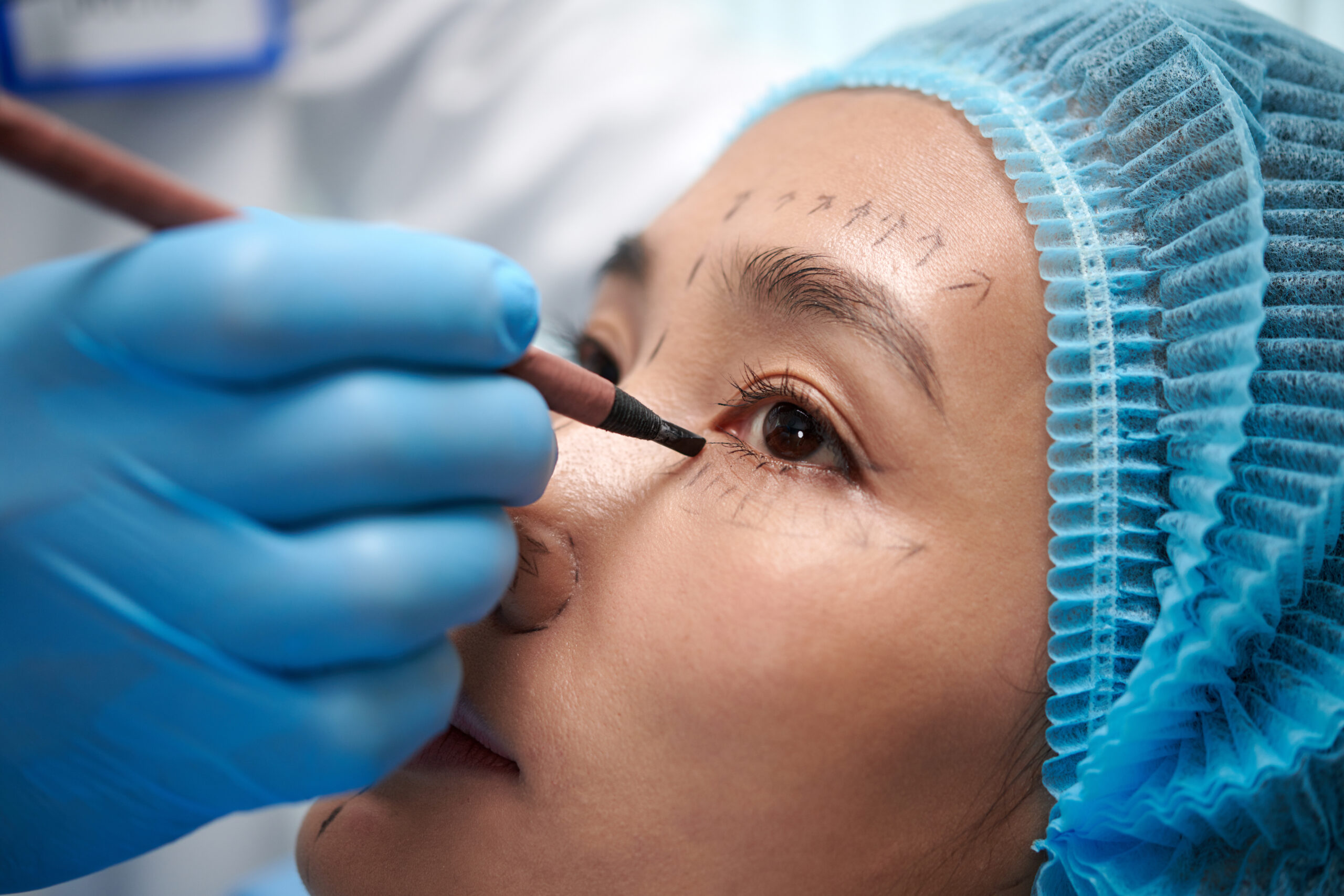
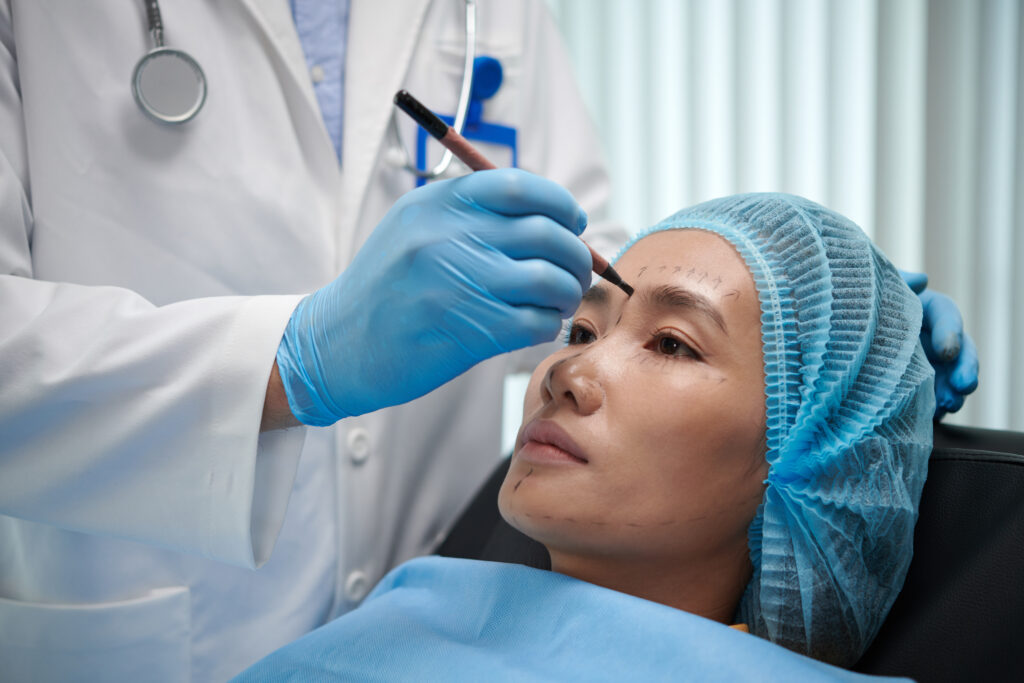
Forehead and eyebrow lifting surgery (Forehead & Brow Lift) is a procedure that repositions tissues and muscles in the upper facial region. It is not merely the excision of excess skin. Current innovations, such as Endoscopic Brow Lift with Endotine, are increasingly favored by plastic surgeons. This technique utilizes an endoscope combined with Endotine fixation devices—biodegradable polymer pins that dissolve naturally. This approach allows for precise surgery, nerve preservation, and very small incisions hidden within the hairline.
[Endoscopic tissue release] → [Elevation of eyebrow and forehead] → [Fixation with Endotine] → [Restoration of eyebrow position and opening of the eyelid]
Mechanisms for Clearly Visible Problem Resolution:
Correcting Brow Ptosis: Helps lift the eyebrow base back to its natural position above the orbital bone, widening the distance between the eyebrow and the eye, resulting in an instantly refreshed and youthful facial appearance.
Reducing Forehead Wrinkles and Frown Lines: The surgeon will realign the forehead muscles (Corrugator & Procerus), helping to reduce tension that causes deep grooves, leading to a smoother and firmer forehead.
Correcting Drooping Eyelids and Hidden Eyelid Creases: Lifting the eyebrow base helps pull up the drooping eyelid skin that was pressing down on the eyelids. This helps the existing eyelid crease open wider and become more defined without the need to excise eyelid tissue.
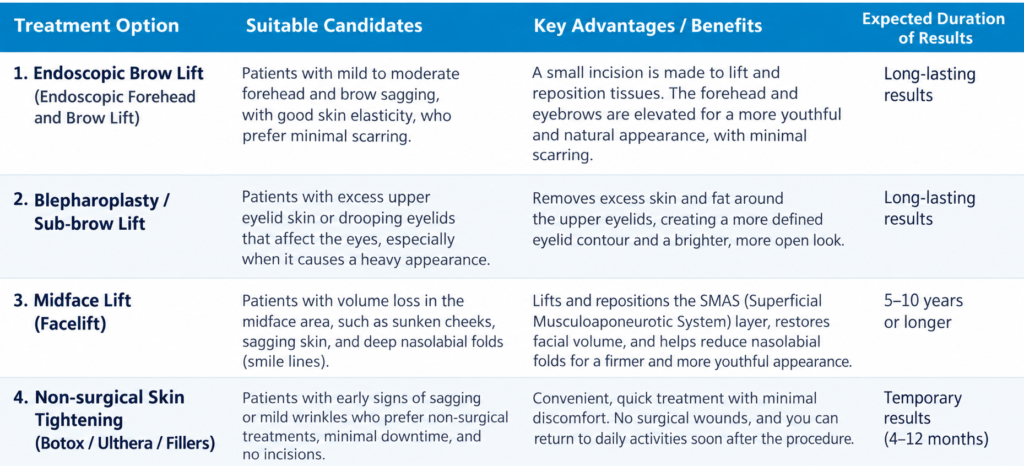
3. Drooping Eyes, Wrinkled Forehead, Sagging Eyebrows: Which Method is Best? Comprehensive Treatment Options.
Due to individual variations in facial structure, the selection of a treatment method must be based on the degree of sagging and the primary cause, as follows:
4. Postoperative Care and Instructions After Forehead and Eyebrow Lift Surgery
To ensure complete tissue adhesion and achieve beautiful, safe results, patients should follow these postoperative care guidelines:
Cold Compress and Sleeping with an Elevated Head: During the first 48–72 hours, apply cold compresses around the face to reduce swelling and bruising. Sleep with the head elevated.
Wearing a Compressive Garment: Wear a compressive facial garment continuously for 24 hours during the first 7 days to ensure the skin and tissue adhere to the new structural framework. Thereafter, wear it only at night for approximately 1 additional month.
Avoiding Sudden Activities and Certain Foods: Avoid strenuous exercise or bending the head down for the first 2 weeks. Abstain from alcohol, smoking, and spicy or high-sodium foods.
5. Frequently Asked Questions (FAQ)