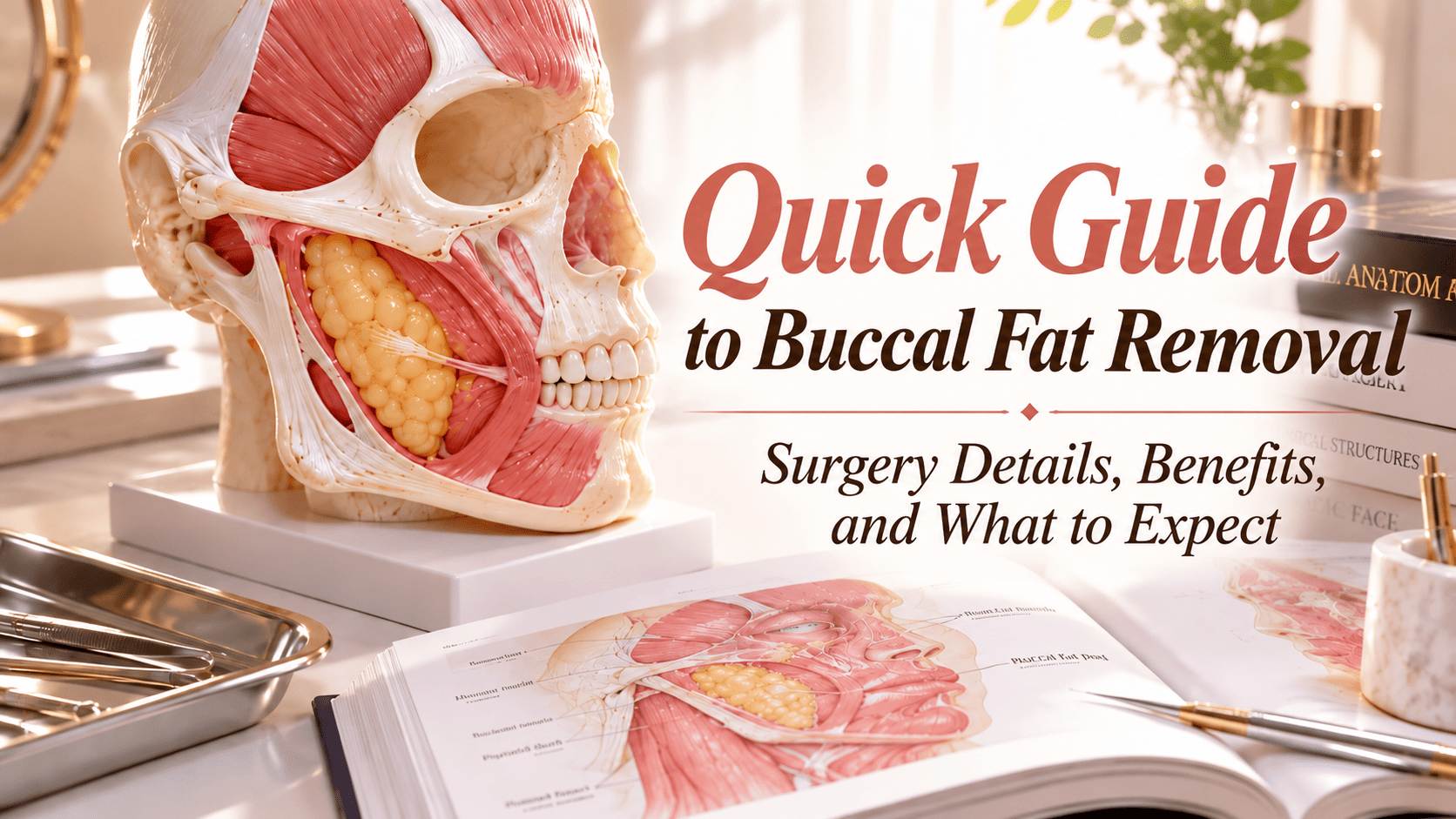
During the "Thanksgiving Glow" campaign in November, many people seek to refine their facial contours in time for the year-end festive season. One procedure that has garnered considerable attention on social media is buccal fat removal, as it is performed through an intraoral incision, leaves no visible external scar, and requires a relatively short operative time.
However, the more important question than short-term results is: "Is my facial structure truly suited to buccal fat removal?" and "What will my face look like in 10–20 years ?"
This article explores the anatomy of the buccal fat pad (Bichat's fat pad), adjacent critical structures such as the parotid duct and the buccal branch of the facial nerve, indications, contraindications, complications, and the long-term effects of facial volume loss with age, with reference to verifiable research from the PubMed database.
Structure of the Buccal Fat Pad and Adjacent Structures
A Fat Pad That Is Not "Ordinary Fat"
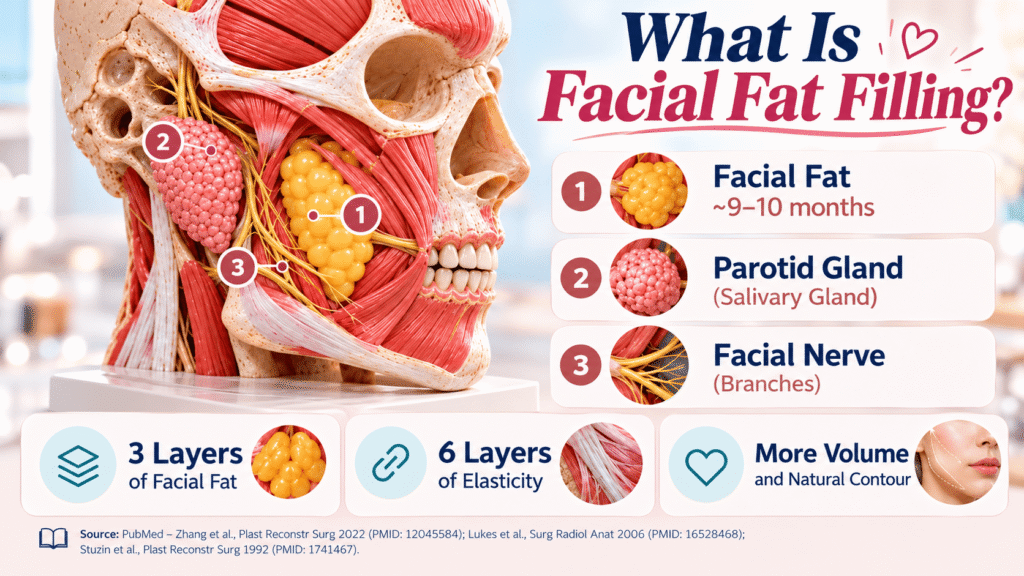
Buccal fat differs considerably from ordinary subcutaneous fat, as it is a deep fat pad enveloped in a distinct capsule, with its own vascular supply and ligamentous attachments to surrounding structures.
Based on cadaveric anatomical studies by Zhang et al., this fat pad is divided into three lobes: the anterior lobe, the intermediate lobe, and the posterior lobe. The posterior lobe gives rise to extensions that insinuate into the buccal, pterygoid, pterygopalatine, and temporal regions. The fat pad is firmly anchored by a total of six ligaments to the maxilla, the zygomatic bone, the temporal muscle fascia, and the buccinator fascia.
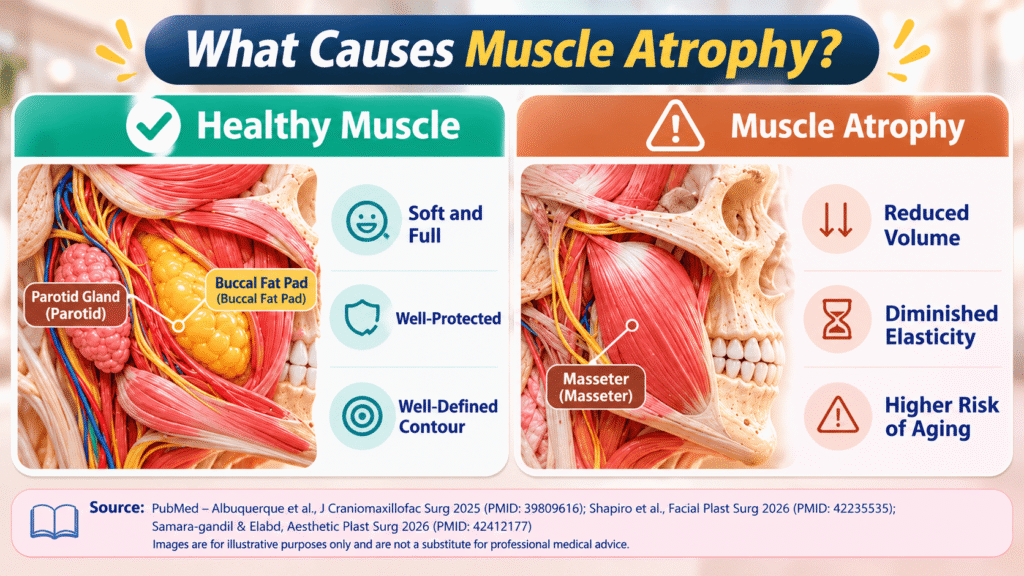
The function of the buccal fat pad is therefore not merely to "fill out the cheeks," but also to fill the deep facial spaces, provide a gliding cushion that facilitates movement of the muscles of mastication and facial expression, and help protect vital structures from external compressive forces. The volume of this fat pad can change throughout the lifespan.
Research in 80 adult cadavers, employing volume measurement and CT/MRI image analysis, found that the mean volume of the buccal fat pad was approximately 10.2 mL in men and approximately 8.9 mL in women. The researchers noted that these normative volume data are highly relevant to determining how much fat should be removed in aesthetic surgery. In practice, surgeons remove only a portion; for example, a study of 68 patients in whom buccal fat management was combined with facelift surgery reported removal of only approximately 1.5–2.5 mL per side.
The Neighbors to Be Wary Of: The Parotid Duct and the Facial Nerve
The facial soft-tissue layers are arranged in a sequential, layered fashion, beginning with the skin → subcutaneous fat → SMAS fascia → muscles of facial expression → deep fascia (parotidomasseteric fascia) and the deepest layer, where the facial nerve, the parotid duct, and the buccal fat pad are situated together.
This is the principal reason why buccal fat removal demands expertise and a thorough understanding of anatomy:
- Parotid duct (Stensen's duct): This structure conveys saliva from the parotid gland into the oral cavity at the buccal region. If injured, it may result in salivary leakage and accumulation beneath the skin.
- Buccal branch of the facial nerve: This branch controls the muscles of the cheek and upper lip. If damaged, it may result in asymmetric smile or abnormal lip movement.
A 2018 review found no reported injuries to the parotid duct or facial nerve in the studies collected. However, a more recent meta-analysis identified cases of facial nerve palsy, albeit very rarely (fewer than 1%), indicating that although the risk is very low, it remains possible if due care is not exercised.
Indications and Contraindications
Individuals Who May Be Suitable Candidates
- Those with prominently full lower cheeks, confirmed by a physician to be attributable to the buccal fat pad itself.
- Those with favorable facial skeletal structure providing baseline volume, and with elastic, firm skin.
- Those with stable body weight, since facial fullness may result from generalized fat accumulation, which should first be addressed through weight management.
- Those with reasonable expectations who understand that buccal fat removal produces mild-to-moderate facial contour refinement.
In 2026, a review of 10 studies (totaling 1,123 patients) found that objective measurements demonstrated a clear reduction in lower facial volume, with high levels of patient satisfaction with outcomes.
Individuals Who Should Not Undergo the Procedure or Should Be Considered with Caution
- Those who already have a slender, small face: Additional fat removal may result in hollow cheeks, an emaciated appearance, or an aged appearance.
- Those beginning to experience age-related facial volume loss: Older individuals are already prone to natural loss of deep fat compartment volume.
- Those with facial width due to masseter muscle or skeletal structure: Buccal fat removal cannot correct facial width attributable to these causes.
- Those with uncontrolled underlying medical conditions or intraoral infection.
Long-Term Effects on the Face with Advancing Age
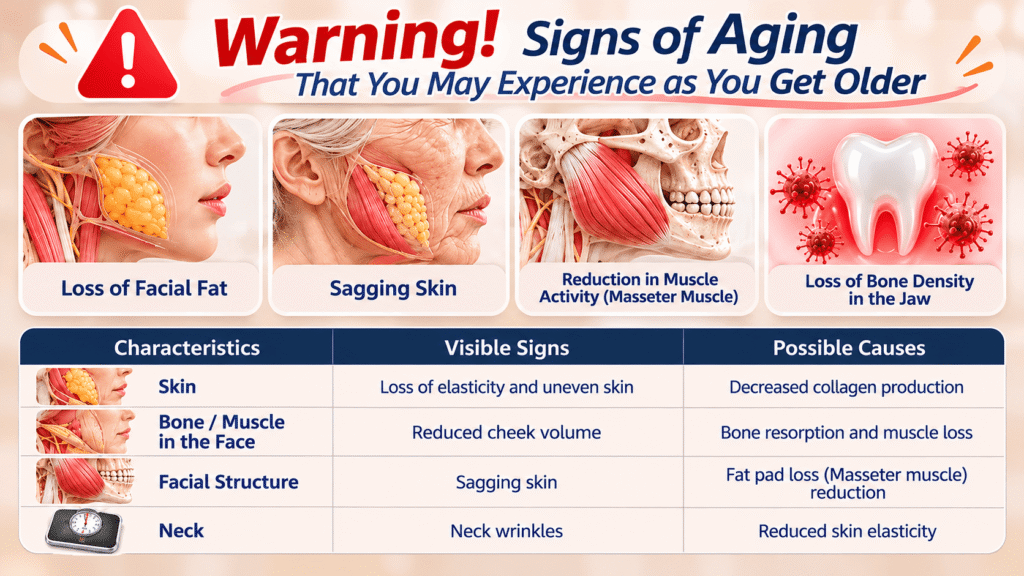
Age-Related Facial Volume Loss
An article on midface restoration states that as individuals age, the facial structure undergoes volume loss in the deep fat compartments of the midface, in particular the suborbicularis oculi fat (SOOF) and the deep medial cheek fat.
Long-Term Evidence Remains Limited
Multiple studies concur that, at present, no research has systematically followed the long-term effects on facial aging trajectories. A 2026 review noted that most follow-up has been short-term, with reported cases of gaunt facial appearance occurring in approximately 1.6%
Therefore, although short-term results may be satisfactory and yield a slim, refined facial contour, patients should recognize that, over time, the body will naturally lose facial fat, which may cause the cheeks to appear hollow—or more hollow than anticipated—with advancing age.
In Older Patients: The Buccal Fat "Descends" Rather Than Being "Excessive"
In some older individuals, the buccal fat pad may undergo downward displacement (buccal fat prolapse), causing the lower facial contour and jawline to appear full and heavy. A study of patients aged 45–64 years undergoing deep-plane facelift addressed this issue by performing only minimal fat excision combined with elevation and suspension of the remaining fat pad, refixating it to the SMAS layer. The jawline appeared slimmer and more sharply defined, with no excessive cheek hollowing observed during an 8-month follow-up. Some complications occurred in certain cases, such as hematoma and transient nerve weakness. These findings suggest that, for patients beginning to age, the appropriate approach may be to "reposition the fat pad" rather than to "excise it."
Short Recovery Period: Is It Suitable for a Holiday Period ?
Buccal fat removal is performed through an intraoral incision and therefore leaves no visible external scar. It is classified as a minor procedure that many individuals choose to schedule during a short holiday. However, a meta-analysis found that the most commonly reported postoperative symptoms include swelling, limited mouth opening (trismus), pain, and temporary asymmetry, which typically occur in the early postoperative period. The researchers therefore recommend that patients plan and consider undergoing this procedure with due caution.
Recommendations for Surgical and Recovery Planning
- Allow sufficient time for swelling to subside before any important date.
- Maintain strict oral hygiene to reduce the risk of infection.
- Consume a soft diet and avoid strenuous exercise.
- If there is abnormal unilateral swelling, fever, or asymmetric smile, seek medical attention promptly.
How PPSI Cares for You ?
At Phuket Plastic Surgery Institute (PPSI), we adhere to the principle that "not every face is suited to buccal fat removal." Our team of board-certified plastic surgeons performs a meticulous assessment of facial structure—including the cause of facial fullness, overall facial volume, age, skin quality, and long-term aesthetic goals. If the assessment determines that the procedure is not appropriate, the physician will candidly recommend alternative approaches to facial contouring.
For those planning to travel to Phuket for a holiday during the year-end period, when the weather is dry and pleasant and conducive to recovery, our team will help coordinate the timing of the procedure and follow-up appointments appropriately, so that you may return home with confidence and the utmost safety. (Note: Results vary by individual.)
Frequently Asked Questions (FAQ)
Q : Who is a suitable candidate for buccal fat removal ?
A : Suitable candidates are those whose lower cheek fullness is genuinely attributable to the buccal fat pad, who have adequate overall facial volume, and whose body weight is stable. A preliminary self-assessment can be made as follows:
1) Observe whether the cheeks appear full despite normal body weight.
2) Distinguish whether facial width arises from the masseter muscle or skeletal structure.
3) Check whether age-related cheek hollowing or infraorbital grooves are already present.
4) Consult a plastic surgeon for palpation and assessment of the deep anatomical layers.
Individuals who already have a slender, small face or who are beginning to experience age-related facial volume loss are generally advised against the procedure.
Q : Will the face appear hollow with age after removal ?
A : This may occur in some individuals, although long-term follow-up research remains limited. Studies have reported gaunt cheek appearance in approximately 1.6% of cases. Because the face naturally loses deep fat with advancing age, appropriate removal volume and careful patient selection by a physician are of paramount importance.
Q : Is buccal fat removal dangerous, and what are the side effects ?
A : Most side effects are temporary, such as swelling, pain, reduced mouth opening, or temporary asymmetry. Serious complications—such as facial nerve palsy, infection, or hematoma—are very uncommon (fewer than 1%). Overall, the complication rate is low, at approximately 4.2%. Choosing to undergo the procedure with a qualified plastic surgeon therefore maximizes safety.
Q : Is all of the buccal fat removed ?
A : Not all of it is removed. In aesthetic surgery, the physician removes only a portion (approximately 1.5–2.5 mL per side) of the total volume of roughly 9–10 mL, so that sufficient fat remains to support the facial structure and to serve as a cushion allowing the facial muscles to function normally.
References (PubMed)
Zhang HM, Yan YP, Qi KM, et al. Anatomical structure of the buccal fat pad and its clinical adaptations. Plast Reconstr Surg. 2002;109(7):2509-18; discussion 2519-20. doi:10.1097/00006534-200206000-00052. PMID: 12045584. https://pubmed.ncbi.nlm.nih.gov/12045584/
Loukas M, Kapos T, Louis RG, et al. Gross anatomical, CT and MRI analyses of the buccal fat pad with special emphasis on volumetric variations. Surg Radiol Anat. 2006;28(3):254-60. doi:10.1007/s00276-006-0092-1. PMID: 16528468. https://pubmed.ncbi.nlm.nih.gov/16528468/
Samargandi OA, ElAbd R. Management of the Buccal Fat Pad During Deep-Plane Facelift: Technique, Safety, and Aesthetic Outcomes in 68 Patients. Aesthetic Plast Surg. 2026. doi:10.1007/s00266-026-06131-4. PMID: 42412177. https://pubmed.ncbi.nlm.nih.gov/42412177/
Stuzin JM, Baker TJ, Gordon HL. The relationship of the superficial and deep facial fascias: relevance to rhytidectomy and aging. Plast Reconstr Surg. 1992;89(3):441-9; discussion 450-1. PMID: 1741467. https://pubmed.ncbi.nlm.nih.gov/1741467/
Moura LB, Spin JR, Spin-Neto R, et al. Buccal fat pad removal to improve facial aesthetics: an established technique? Med Oral Patol Oral Cir Bucal. 2018;23(4):e478-e484. doi:10.4317/medoral.22449. PMID: 29924767. https://pubmed.ncbi.nlm.nih.gov/29924767/
Albuquerque MC, Arruda KAR, Xavier Junior GF, et al. Prevalence of complications of buccal fat removal: A systematic review and meta-analysis. J Craniomaxillofac Surg. 2025;53(4):363-369. doi:10.1016/j.jcms.2024.12.014. PMID: 39809616. https://pubmed.ncbi.nlm.nih.gov/39809616/
Shapiro J, Zgardau A, Pundkay G, et al. Aesthetic Outcomes, Complications, and Reported Long-Term Effects of Buccal Fat Pad Reduction: A Systematic Review. Facial Plast Surg. 2026. doi:10.1055/a-2875-0465. PMID: 42235535. https://pubmed.ncbi.nlm.nih.gov/42235535/
Newsome HA, Chi JJ. Mastering Midface Injections. Clin Plast Surg. 2023;50(3):437-446. doi:10.1016/j.cps.2022.12.008. PMID: 37169409. https://pubmed.ncbi.nlm.nih.gov/37169409/